-
Guxiang Town, Chaozhou City,Guangdong Province, China

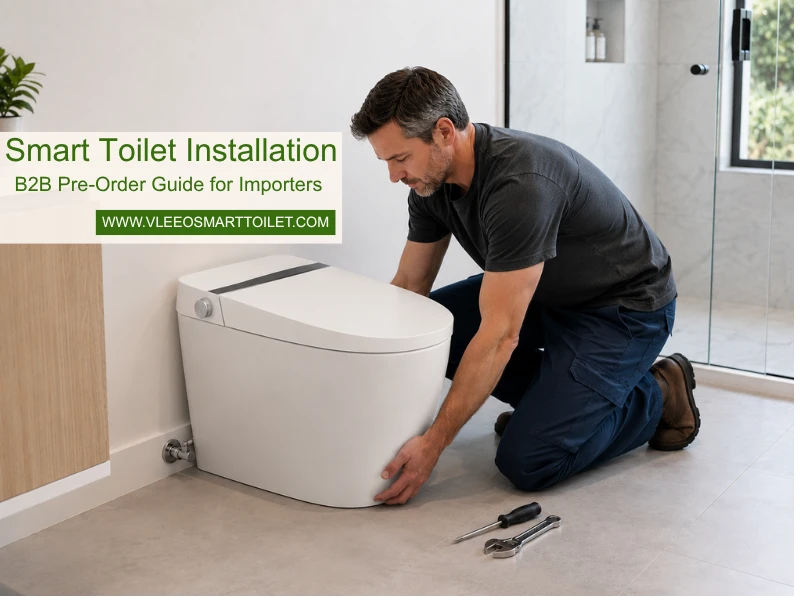
Smart Toilet Installation Requirements: B2B Pre-Order Guide for Importers
Why Buyers Should Check Smart Toilet Installation Requirements Before Ordering
For B2B buyers, smart toilet installation requirements should be checked before any quotation is approved. That sounds obvious, but a large share of channel problems still start with avoidable installation mismatch rather than product appearance or feature quality.
A distributor may like the selling points. A project buyer may like the target price. But if the model does not match local water pressure, outlet location, rough-in size, or bathroom clearance, the product becomes harder to install, harder to explain, and more expensive to support after delivery.
In practice, buyers are not only checking whether the toilet can be installed. They are checking whether the model can survive retail launch, project handover, installer feedback, and after-sales support without turning into a margin problem.
Before placing an order, importers and project teams should ask:
- Will this model flush reliably under local site conditions?
- Does the rough-in match the target market or project standard?
- Is the power setup realistic for the bathrooms where the product will be used?
- Is there enough working space for the lid, side access, remote use, and servicing?
- Can the supplier provide smart toilet installation documents that reduce installer confusion?
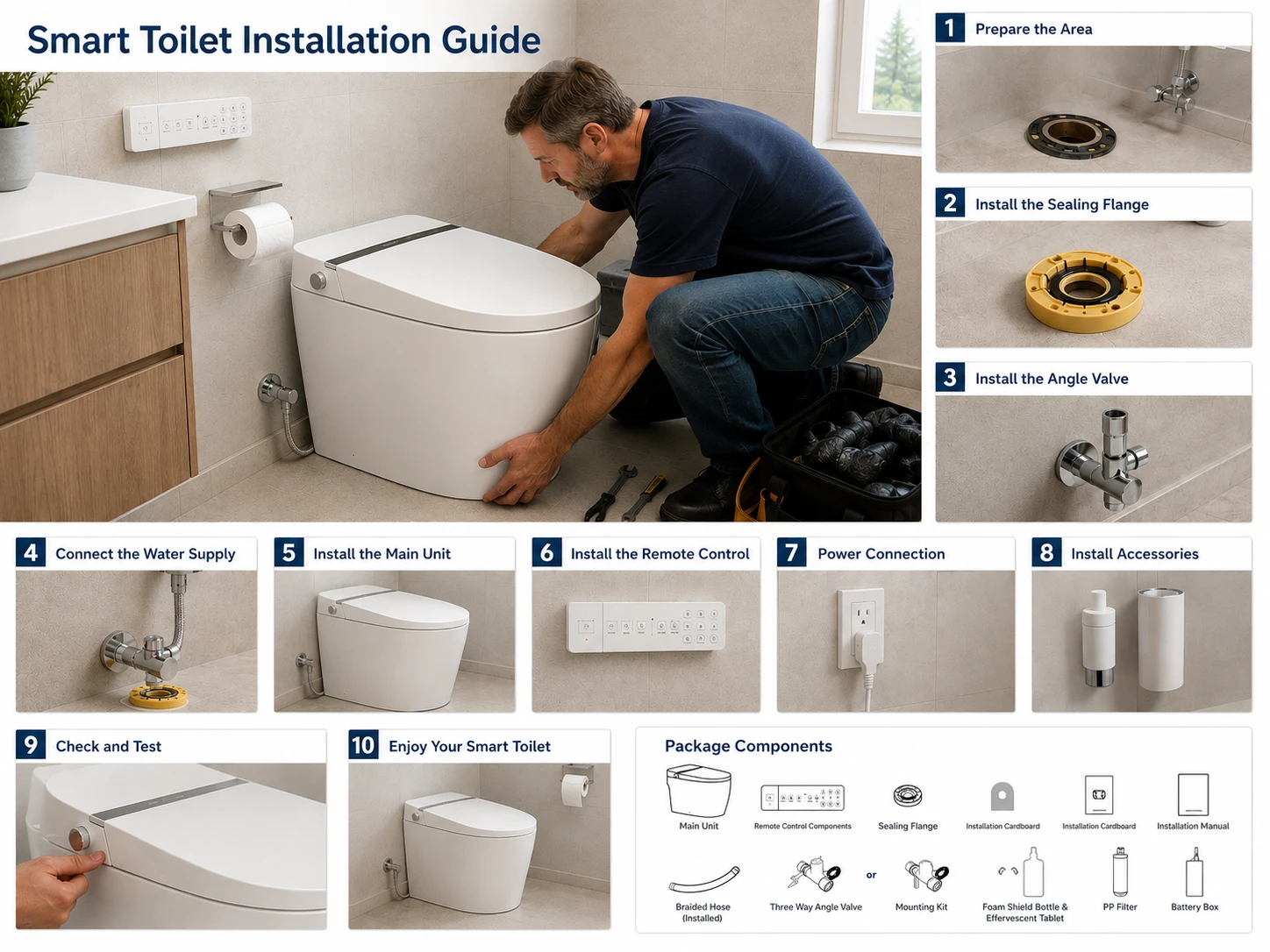
Water Requirements: Supply Position, Pressure, and Wash Stability
Water checks should cover more than basic inlet connection. A smart toilet combines ceramic plumbing, flushing logic, and bidet wash functions, so weak planning here usually shows up later as installer complaints or inconsistent user experience.
Water Supply Position
Before quoting a model, confirm:
- inlet location
- shutoff-valve position
- hose-routing space
- compatibility with the product inlet layout
If the water point conflicts with the toilet body, installers may need field adjustments, extra fittings, or a workaround that was never part of the original sales promise.
Water Pressure
Water pressure is where many seemingly suitable models start to separate. High-rise apartments, hotel projects, and renovation jobs often behave very differently from a clean showroom demo.
Ask the supplier for:
- minimum working water pressure
- recommended operating range
- flushing notes for low-pressure conditions
- whether the model uses a built-in tank flushing approach or depends more directly on incoming supply pressure
That last point matters because buyers often compare products across North America, Europe, and mixed-spec project channels where site conditions are not uniform.
Water Quality and Filter Maintenance
Hard water and unstable water quality can shorten the life of wash-related components and increase service calls.
Check whether the supplier provides:
- inlet filter guidance
- replacement intervals
- nozzle cleaning instructions
- maintenance notes for long-term wash performance
Those details are not minor. They directly affect how easy the product will be to support once the first batch is in the market.
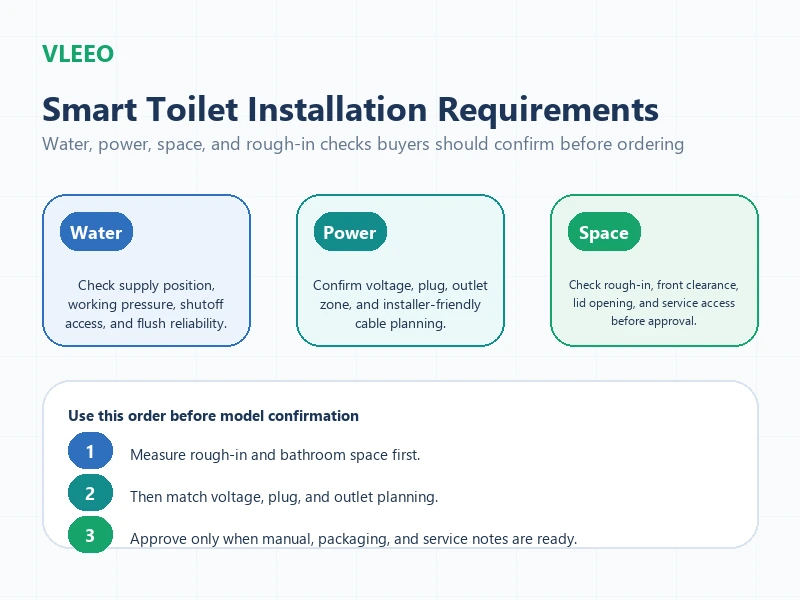
Power Requirements: Voltage, Outlet Planning, and Safe Access
Power planning is one of the easiest details to ignore during sourcing and one of the most annoying details to fix after launch. Buyers often focus on ceramic design and feature count first, then discover later that the electrical setup is awkward for the target market.
Voltage and Plug Type
Before locking the model, confirm:
- operating voltage
- plug type
- frequency
- whether market-specific electrical versions are available
Two products may look the same in a brochure, but one may still be wrong for the target market if the plug, voltage, or certification route does not match the sales channel.
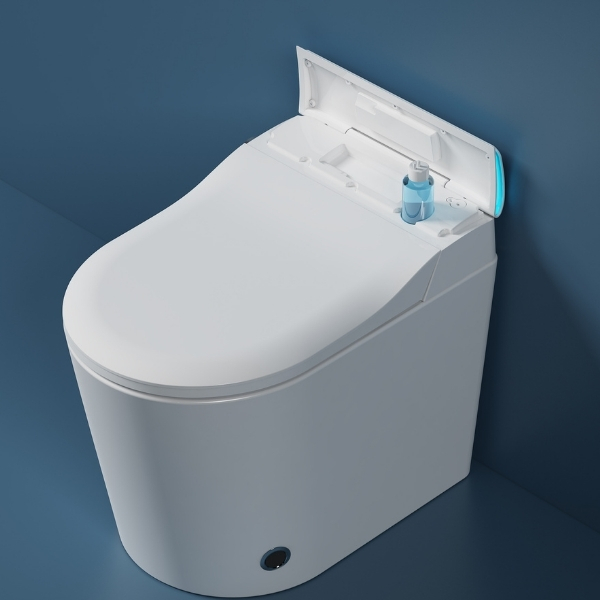
Outlet Location and Cable Access
Ask the supplier to clarify:
- recommended outlet zone
- distance from the toilet body
- cord direction
- cord length
- service access after installation
An outlet that is technically present but hard to reach is still a bad installation outcome.
Bathroom Electrical Expectations
Different markets handle bathroom outlet placement and moisture protection differently. Buyers should review local installation practice early, especially when selling into projects, retailers with strict compliance review, or contractors who will push back on unclear installation assumptions.
For general electrical safety reference, buyers can review Intertek ETL guidance.
Space Requirements: Body Size, Clearance, and Real Working Room
A model can match the rough-in and still create trouble if the room layout is too tight. Product pages usually show the toilet from the best angle. Buyers need the working dimensions, not just the showroom impression.
Overall Product Dimensions
Confirm:
- overall width
- overall depth
- overall height
- installed seat height
- lid-open height
- rear clearance
These numbers matter in retail listing copy, apartment planning, renovation work, and installer expectations.
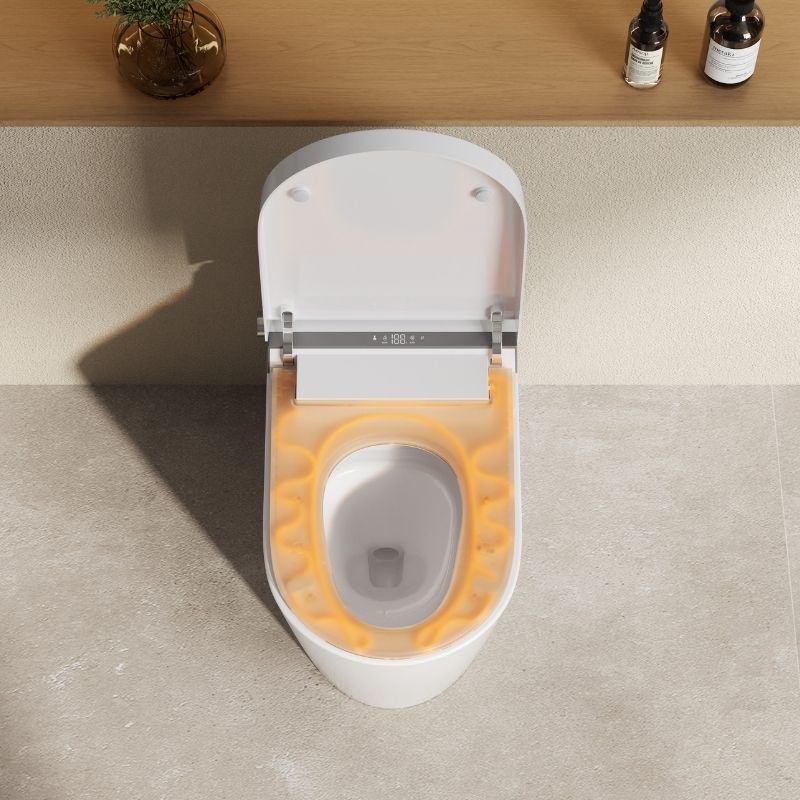
Side Clearance and Service Access
Buyers should also confirm:
- side clearance for cleaning
- access to filters, hoses, valves, or power cord
- remote holder position
- installer working room
A model that looks compact on paper may still create service problems if maintenance access is poor after installation.
User Movement and Project Fit
For apartments, hotels, senior-friendly bathrooms, and project sales, think beyond the toilet body itself:
- approach space
- door-swing conflicts
- sit-down and stand-up convenience
- access for maintenance staff
These factors often decide whether the product feels workable in the field or problematic after handover.
Rough-In Checklist: The Detail That Prevents Returns
Rough-in mismatch is one of the most preventable causes of return pressure in this category. It is also one of the easiest details to oversimplify during quotation.
Confirm the Local Rough-In Standard
Do not assume one market uses the same rough-in expectation as another. Check:
- the local rough-in standard used by the target channel
- whether the project is renovation or new construction
- whether model variants exist for different rough-in needs
Confirm Product-Specific Rough-In Fit
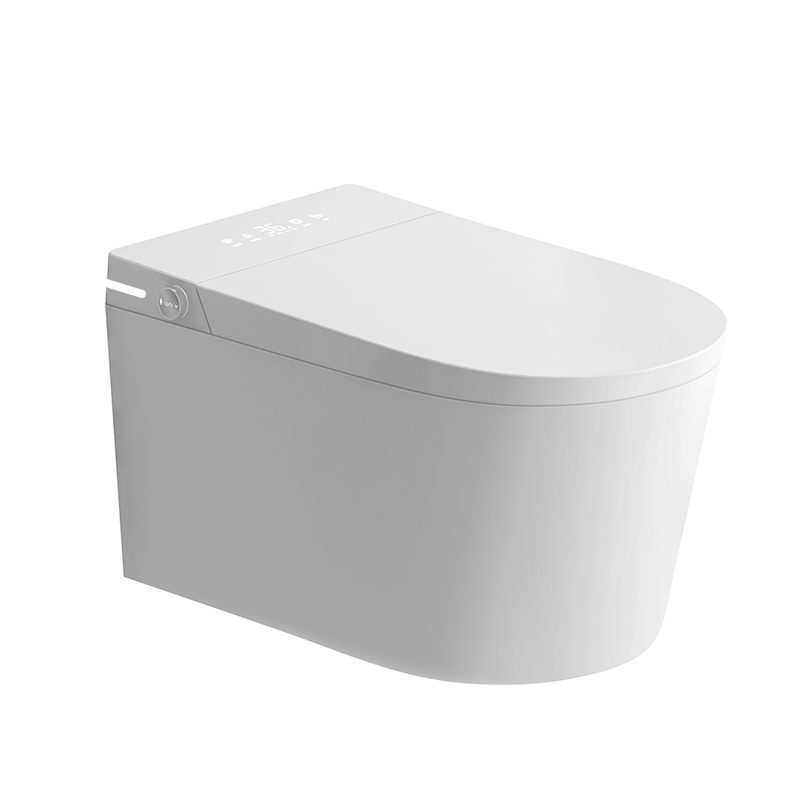
For internal-link planning, relevant product paths include:
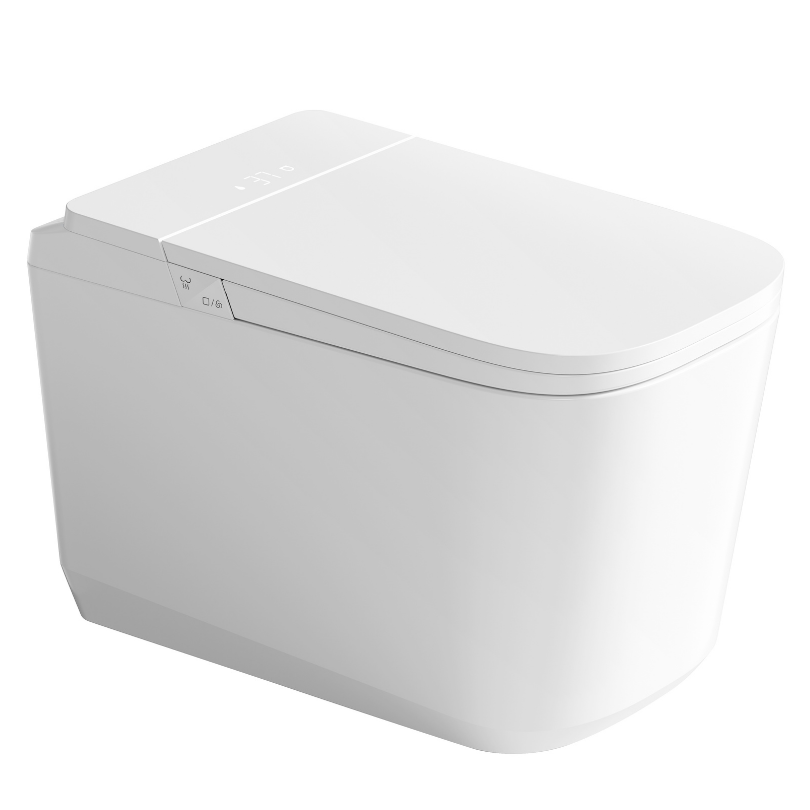
CL-721 is a useful reference for this topic because it aligns with rough-in-driven search intent. Buyers should still confirm the exact available configuration with VLEEO before quoting it into a live project.
Check Finished-Wall and Drain Conditions
Rough-in should never be treated as a single number in a spreadsheet. Buyers should also verify:
- finished-wall reference point
- floor-drain position
- flange condition in renovation work
- whether site measurements are taken before shipment approval
That extra check is what keeps a “good-looking” quote from becoming a site problem later.
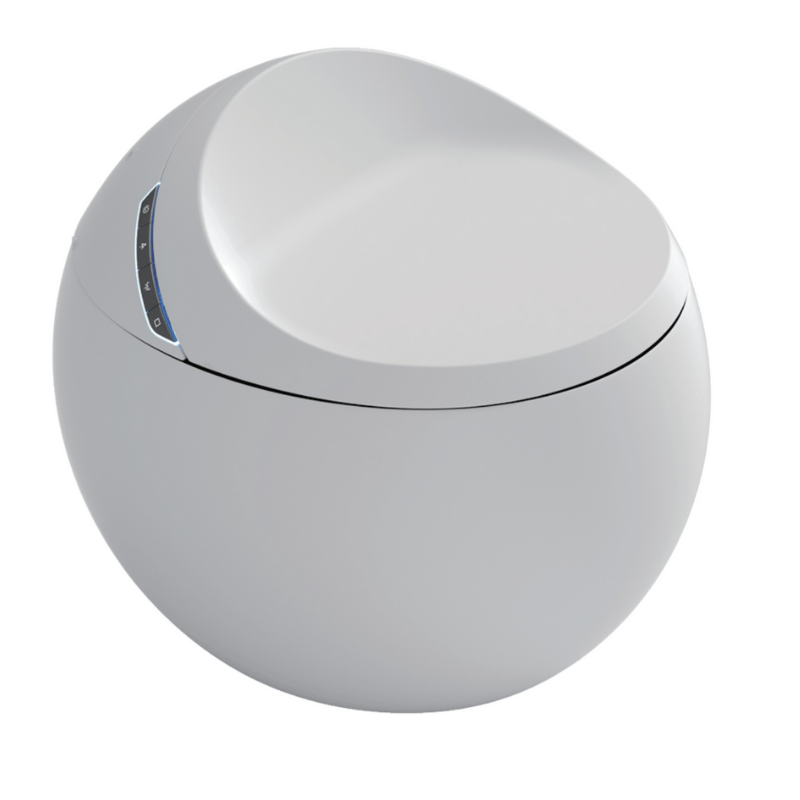
Documents, Packaging, and Smart Toilet Installation Support
A model is not installation-ready just because the ceramic body is approved. Buyers should request supporting materials before bulk production starts.
Documents to Request
- installation manual
- dimensional drawing
- rough-in diagram
- water and power requirement sheet
- troubleshooting guide
- spare parts list
Packaging Checks
Packaging affects installation success more than many buyers expect. Damaged ceramics, missing accessories, or unlabeled hardware often create site failure even when the product specification was correct.
Ask:
- how ceramic protection is handled
- whether accessories are packed in labeled compartments
- whether manuals are inserted in each carton
- whether export packaging fits retailer or project handling logic
After-Sales Preparation
Installation questions usually become after-sales questions later, so buyers should clarify:
- replacement-part lead time
- remote or control support
- nozzle maintenance guidance
- PDF or video installation support
- QC process for water and electrical functions
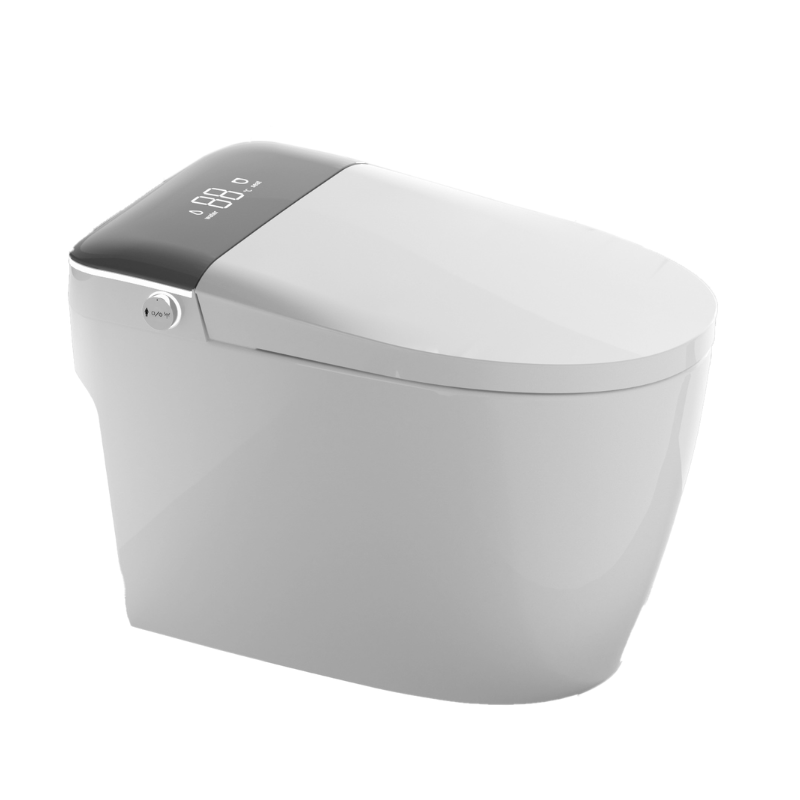
B2B Smart Toilet Installation Checklist
| Check Area | What to Confirm | Why It Matters |
|---|---|---|
| Water | inlet position, pressure range, flushing logic | avoids weak flush and field modification |
| Power | voltage, plug, outlet position, cord access | reduces unsafe or impractical installations |
| Space | body dimensions, lid clearance, service access | lowers layout conflict and maintenance trouble |
| Rough-In | local standard, product fit, drain condition | prevents returns and installer complaints |
| Documents | manual, drawing, troubleshooting guide | improves launch clarity and installation accuracy |
| Packaging | ceramic protection, accessory packing, carton labeling | reduces transport and site damage |
| After-Sales | spare parts, response process, maintenance notes | protects channel reputation |
Common Buyer Mistakes
1. Choosing Features Before Checking Installation Fit
Heated seats, dryers, and automatic flushing can help sales. They do not fix rough-in mismatch, poor outlet planning, or weak water conditions.
2. Approving by Product Photos Instead of Site Measurements
Bathroom layout decisions should not be made from brochure images alone. Buyers need actual drawings and measurement logic before volume approval.
3. Treating Installation as Someone Else’s Problem
If the importer does not control installation information, the confusion shifts to dealers, contractors, or project teams. That usually returns later as complaints and avoidable support cost.
4. Ignoring Documentation and Spare Parts
Even a strong model becomes harder to sell if the supplier cannot support manuals, replacement parts, and troubleshooting guidance.
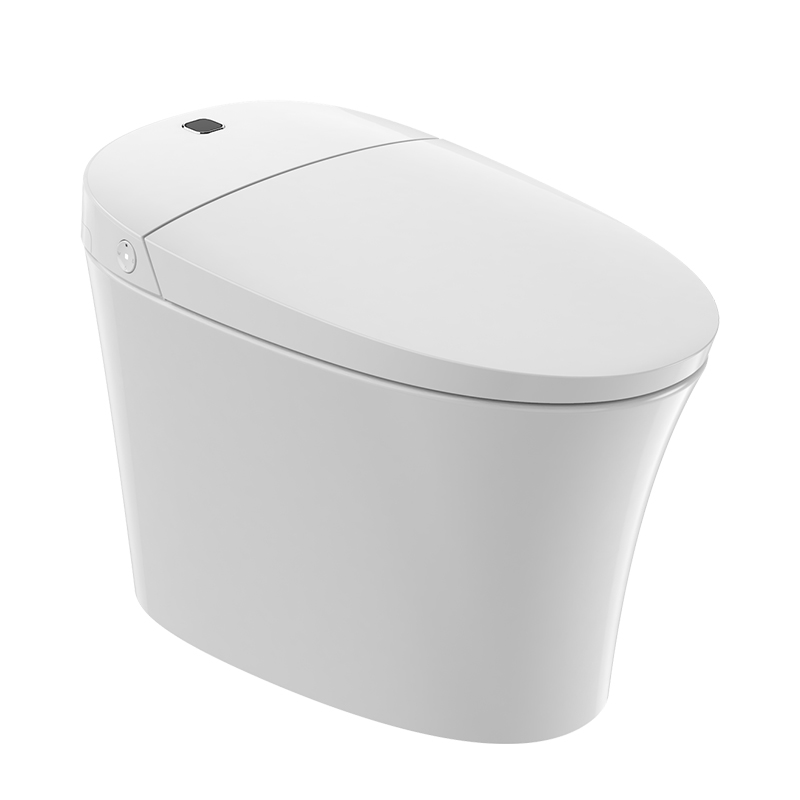
FAQ about Smart Toilet Installation
Do smart toilets need special plumbing?
Not usually, but buyers still need to confirm inlet position, water pressure, flushing logic, and rough-in compatibility before ordering.
1. Do smart toilets need a dedicated power outlet?
In many cases, yes. Buyers should confirm outlet position, voltage, plug type, and service access before approving a model for launch or project use.
2. Why does rough-in matter so much for B2B buyers?
Because rough-in mismatch creates returns, installer complaints, and field modifications that directly increase channel cost.
3. What installation documents should importers request from suppliers?
At minimum, ask for the installation manual, dimensional drawing, rough-in diagram, water and power requirement sheet, troubleshooting guide, and spare parts list.
4. What is the biggest installation mistake buyers make?
The most common mistake is approving the feature set first and checking installation fit later. That order should be reversed.
Conclusion
Smart toilet installation requirements should be treated as part of product selection, not as an afterthought for the installer. Buyers who confirm water, power, space, rough-in, packaging, and document readiness early usually avoid the most expensive launch problems later.
If you are comparing models for wholesale, project supply, or private-label programs, VLEEO can help review layout assumptions, rough-in fit, electrical configuration, and installation support before order confirmation.
- Contact VLEEO to discuss model fit, rough-in requirements, and installation-ready configurations for your market.