-
Guxiang Town, Chaozhou City,Guangdong Province, China

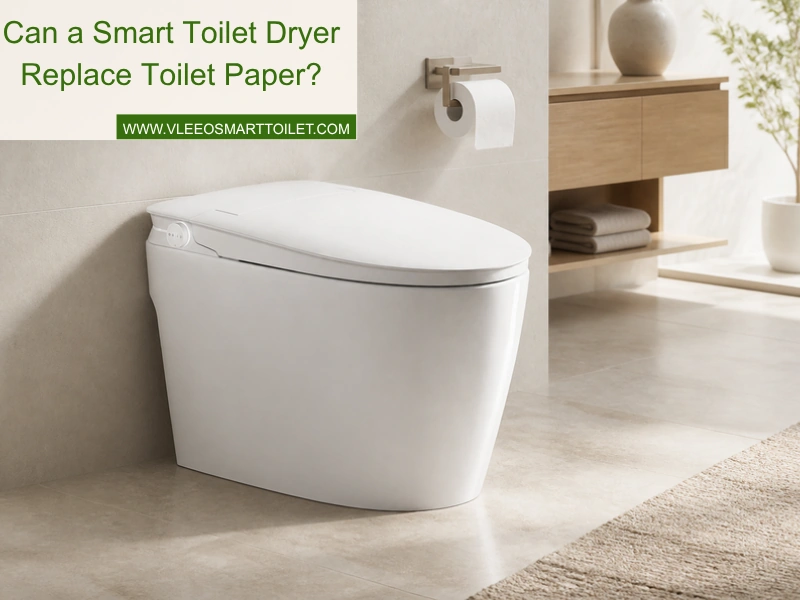
Can a Bidet Replace Toilet Paper? Smart Toilet Dryer Expectations for Buyers
A customer sees warm-air dryer on a smart toilet feature list and asks a very direct question: can a bidet replace toilet paper? For distributors, this is not only a consumer question. It is also a product-page, sales-training, and after-sales expectation question.
For distributors, e-commerce buyers, and product marketing teams, the useful answer to can a bidet replace toilet paper is not a dramatic promise. A smart toilet dryer can reduce toilet paper use, and some users may finish without paper when they are willing to wait through the drying cycle. But many users still prefer to pat dry with a small amount of paper, especially when they want to leave quickly.
That difference matters. If a product page says “no more toilet paper” and the buyer still uses a few sheets, the feature may feel disappointing even when the smart toilet is working normally. If the same feature is positioned as a comfort upgrade that reduces paper dependence, the expectation is clearer and easier to defend after the sale.
The honest short answer for buyers
The honest answer to can a bidet replace toilet paper is: a warm-air dryer can help reduce toilet paper use, but it should not be sold as the only drying method every user will need.
Official consumer guidance from bidet brands commonly presents three drying choices after washing: pat dry with a few sheets of toilet paper, use a dedicated towel, or use an electric seat with a warm-air dryer. For example, Brondell’s drying guide discusses these common post-bidet drying methods. That is a good signal for B2B teams: the market already understands drying as a choice, not a single universal behavior.
When a VLEEO smart toilet configuration includes warm-air drying, the safer buyer-facing promise is simple: the dryer supports a cleaner, more comfortable routine and can lower toilet paper dependence. So if a buyer asks can a bidet replace toilet paper, the answer should leave room for different habits, bathrooms, and comfort expectations.
Buyer-safe positioning:
- Say the dryer helps reduce toilet paper use.
- Explain that some users may still pat dry with a small amount of paper.
- Avoid fixed paper-saving percentages unless you have market-specific data.
- Keep product-page copy, packaging icons, manuals, and after-sales replies consistent.
- Use **can a bidet replace toilet paper** as an educational question, not as an absolute advertising promise.
Why smart toilet drying feels different from a hand dryer
A bathroom hand dryer is designed for exposed hands and high-speed air. A smart toilet dryer is designed for a more sensitive area, so comfort and safety matter more than force. That is why the experience often feels like a warm, controlled airflow rather than a powerful blast.
This is where product marketing teams can accidentally overpromise. A customer may imagine “dryer” as something that finishes the job in seconds. In real smart toilet use, the dryer is usually more about comfort, hygiene perception, and reduced paper use than instant drying. That is why the answer to can a bidet replace toilet paper should be based on real use behavior, not only on the word “dryer.”
Independent consumer reviews often make this gap visible: users may like the dryer and still say they use a little paper, or that they need more than one drying cycle. A SELF review of an electric bidet, for example, describes using less paper while still needing some paper in real life. Those reactions do not mean the feature is bad. They mean the product page needs better expectation setting.
| Buyer assumption | More accurate expectation |
|---|---|
| A dryer works like a high-speed hand dryer. | A smart toilet dryer is designed for comfort and controlled warmth. |
| Drying should finish in a few seconds. | Many users need more patience or a final pat dry. |
| If paper is still used, the feature failed. | Reduced paper use can still be a successful user experience. |
For teams building SEO content around can a bidet replace toilet paper, this comparison is useful because it separates search interest from product overclaiming.
What affects drying time in real bathrooms
Many category guides describe warm-air drying as taking roughly one to two minutes, depending on the product and the user. For B2B buyers, that should be treated as a category-level expectation, not a fixed promise for every model. When a marketplace buyer asks can a bidet replace toilet paper, drying time is one of the reasons the answer cannot be the same for every customer.
Drying time can change with airflow strength, temperature setting, how much water remains after washing, user posture, body hair, room temperature, and personal patience. A user who wants to leave immediately may still pat dry with paper even if the dryer works well.
Before placing a large OEM/ODM order, distributors should ask the supplier how the selected configuration presents dryer settings, what language should be used in the manual, and whether sample testing supports the wording planned for the product page. This gives the sales team a defensible answer when shoppers search can a bidet replace toilet paper before buying.
Drying-time variables to check before launch:
- Airflow strength and comfort level
- Temperature setting range and safety limits
- Whether the wash cycle leaves excess water
- Whether user position changes airflow effectiveness
- Whether the target market expects quick drying or accepts a longer cycle
- Whether your answer to **can a bidet replace toilet paper** is supported by sample testing.
How distributors should describe the dryer on product pages
The best product copy should help the buyer sell confidently without creating avoidable complaints. Instead of saying “replaces toilet paper,” use language such as “helps reduce toilet paper use,” “supports hands-light drying,” or “warm-air drying for added comfort after washing.” If the target keyword is can a bidet replace toilet paper, the article can answer that question clearly without turning it into an absolute product claim.
If your market responds strongly to sustainability messages, connect the feature to reduced paper dependence rather than a fixed savings percentage. Unless you have verified local user data, do not claim a specific reduction rate. The claim needs to survive reviews, returns, and distributor after-sales conversations.
For marketplace listings, the same rule applies. A short bullet can say “warm-air dryer helps reduce toilet paper use after washing.” The FAQ can then answer can a bidet replace toilet paper by explaining that some users dry fully with the dryer, while others prefer a small final pat dry.
| Claim type | Example wording | B2B risk level |
|---|---|---|
| Recommended | Warm-air dryer helps reduce toilet paper use after washing. | Low |
| Use with context | Some users can finish without paper when they wait for the drying cycle. | Medium |
| Avoid | No toilet paper needed for every user in every bathroom. | High |
This is also a practical SEO point. A post targeting can a bidet replace toilet paper should answer the query directly, but the product page should still use cautious commercial language.
When customers may still use a small amount of toilet paper
Customers may still use toilet paper when they are in a hurry, when they prefer a dry feeling immediately, when they are new to bidet use, or when the airflow does not match their preferred position. This is normal user behavior, not necessarily a product defect. It is also the practical reason why can a bidet replace toilet paper should be answered with honest expectations rather than a one-line promise.
That point is important for distributors. If a buyer expects a complete lifestyle change on day one, the dryer can be judged unfairly. If the buyer expects a cleaner wash followed by lower paper use, the product experience is easier to understand.
Sales teams should also avoid making the dryer the only reason to upgrade. Warm-air drying works best as part of a broader comfort package with bidet washing, heated seat options, adjustable settings, deodorization where available, and a clear installation plan.
Common situations where paper may still be used:
- The user is in a hurry.
- The user wants an immediately dry feeling.
- The user is new to bidet use and still building a habit.
- The user’s sitting position does not match the airflow path well.
- The bathroom is cold, which can make the drying cycle feel longer.
- The customer read **can a bidet replace toilet paper** content online and expected a faster change in habit.
What to confirm before choosing a model for your market
Before importing or listing a dryer-equipped smart toilet, confirm the exact configuration. Some models may include warm-air drying, while other configurations in the same product family may focus on washing, seat heating, or flushing features. Do not build marketing claims from a general category description alone.
Buyers should confirm whether dryer temperature is adjustable, whether airflow settings are available, how the feature is presented in the manual, and what after-sales wording the supplier recommends. These details help your team avoid exaggerated claims and answer customer questions consistently, especially when the product page targets searches like can a bidet replace toilet paper.
For project buyers, it is also useful to test samples with the same user profile you expect in the market. A hotel, apartment project, retail showroom, and e-commerce customer base may all respond differently to drying time and comfort.
That sample feedback can then shape how your team answers can a bidet replace toilet paper in product pages, FAQs, and sales training.
| What to confirm | Why it matters for buyers |
|---|---|
| Dryer included in selected configuration | Avoid listing a feature that is not in the ordered version. |
| Adjustable temperature or airflow | Helps match comfort expectations in different markets. |
| Manual and packaging wording | Keeps the sales promise aligned with product support materials. |
| Sample testing feedback | Gives the distributor evidence before writing strong claims. |
| After-sales answer script | Helps service teams respond consistently when users still use paper. |
How VLEEO helps buyers set the right expectation
VLEEO works with distributors, project buyers, and private-label teams that need product features to be easy to explain after installation. For dryer-equipped configurations, the goal is to help buyers describe the feature accurately: warm-air drying improves comfort and can reduce paper dependence, but user habits still matter.
That is why a good smart toilet supplier should support more than the product itself. Buyers need sample testing, clear feature confirmation, product-page wording, packaging feature checks, and after-sales answers that match real use. This is especially important when the product will be sold through online listings where reviews can shape future conversion.
If you are comparing smart toilet configurations for a distributor program, start with the dryer claim you want to make. Then confirm whether the selected model, manual, packaging, and customer service script can support that claim. A strong answer to can a bidet replace toilet paper should be supported by product configuration, not only by marketing language.
FAQ
Q1. Can a bidet replace toilet paper completely?
For some users, a bidet wash plus warm-air dryer may reduce or remove the need for toilet paper in many situations. For many others, a small pat dry remains part of the routine. So the best B2B answer to can a bidet replace toilet paper is “it can reduce paper dependence, but user habits still matter.”
Q2. How long does a smart toilet dryer usually take?
Category guidance often puts warm-air drying in the one-to-two-minute range, but real results depend on airflow, temperature, moisture left after washing, user position, and patience. Treat any time claim as model-specific unless it has been tested on the selected configuration. This is why can a bidet replace toilet paper is partly a drying-time question and partly a user-habit question.
Q3. Should distributors advertise “no toilet paper needed”?
That claim is risky unless it is supported by clear model-level testing and careful wording. A safer claim is that the dryer helps reduce toilet paper use and supports a more comfortable routine after washing.
Q4. What should buyers ask the supplier before ordering?
Ask whether the selected configuration includes warm-air drying, whether settings are adjustable, what claim wording is recommended, and how the supplier supports product-page copy, manuals, packaging, and after-sales answers.
Build the promise around comfort, not a paper-free guarantee
For smart toilet buyers, the stronger message is not “throw away toilet paper forever.” The stronger message is more practical: a warm-air dryer can make the post-wash routine more comfortable, reduce toilet paper dependence, and give distributors a feature that is easy to explain when expectations are set honestly. That is the most reliable way to answer can a bidet replace toilet paper for both sales conversion and after-sales support.
VLEEO can help distributors and OEM/ODM buyers confirm the right smart toilet configuration, prepare buyer-safe product language, and plan the support materials needed before launch.
Contact VLEEO to discuss smart toilet configurations for your market, or review the VLEEO smart toilet category for feature options.