-
Guxiang Town, Chaozhou City,Guangdong Province, China

One Piece Smart Toilet: Features, Benefits, and Buying Guide
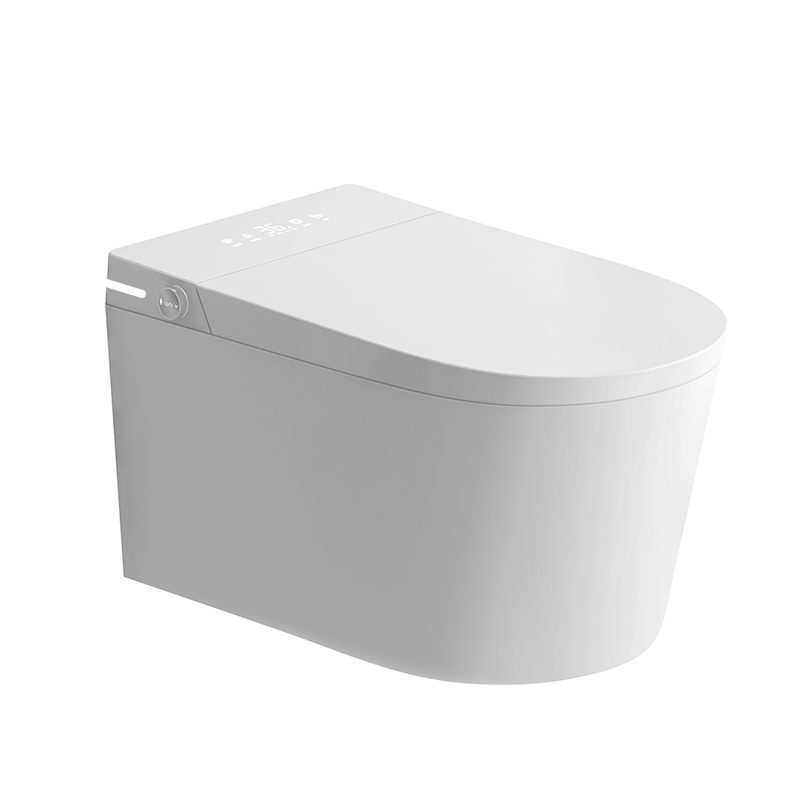
A one piece smart toilet often enters a showroom as the product that needs the least explanation: one smooth ceramic body, no separate tank, and a built-in wash system. Yet the moment a buyer asks for a quotation, the simple shape starts hiding difficult choices. The same outline may be offered with warm-water washing, seat heating, drying, and automatic flushing, or with a much simpler non-electric setup.
That changes the buying question. You are not deciding whether the toilet is one piece. You are deciding what the integrated product must do, which bathroom conditions can support it, and where it should sit in your price range.
A useful comparison begins with the user routine and the installation site. Which functions will customers notice during a showroom demonstration? Is there suitable power, water pressure, and drainage? Can the sales team explain the difference between two similar-looking configurations without reading a full specification sheet?
One-piece describes the body, not the market position
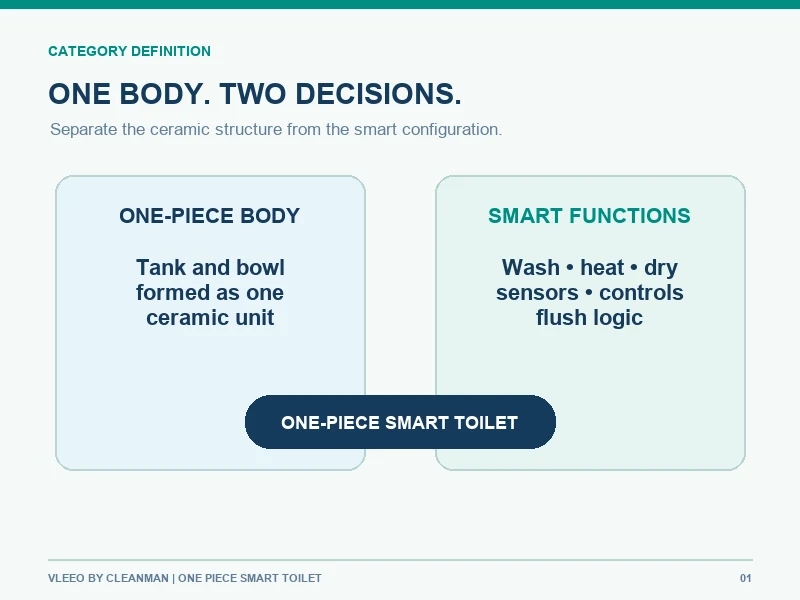
A one-piece toilet uses an integrated body rather than a separate external tank and bowl. The smoother outline is easy to recognize in a showroom, but it says little about how the product will perform in daily use or where it belongs in a product range.
The configuration gives the buyer that answer. A full-electric model may include warm-water washing, seat heating, warm-air drying, automatic flushing, sensors, a remote, or side controls. A non-electric configuration can still provide washing and flushing functions without powered comfort features. The exact package depends on the selected model and order.
Two one-piece smart toilets can look similar and still serve different buyers.
One may support a complete warm-water washing and drying experience for a higher price tier. Another may suit a more economical range or a bathroom without a suitable power outlet. The body is the common starting point. The function package, installation fit, and target customer create the difference.
Feature names are not universal. A buyer still needs the exact model sheet because two products can use similar terms while offering different controls, settings, or results.
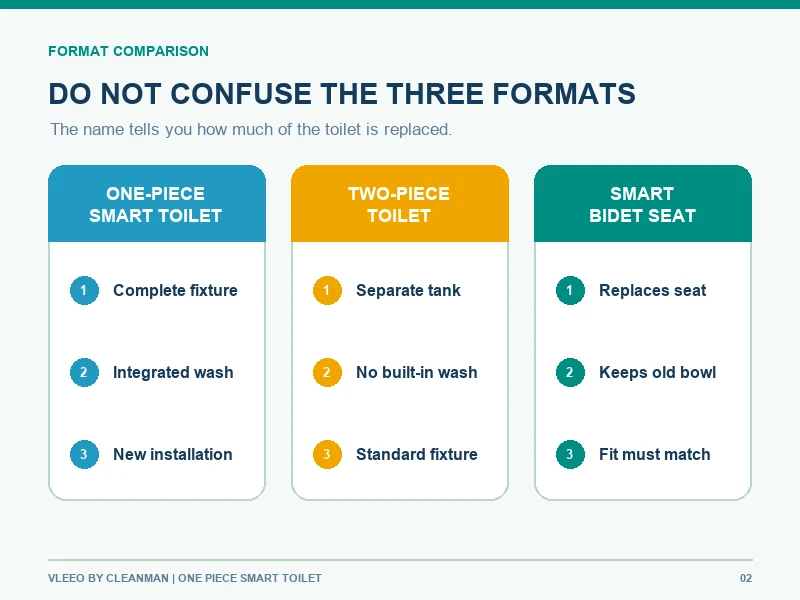
One piece smart toilet, two-piece toilet, or smart seat
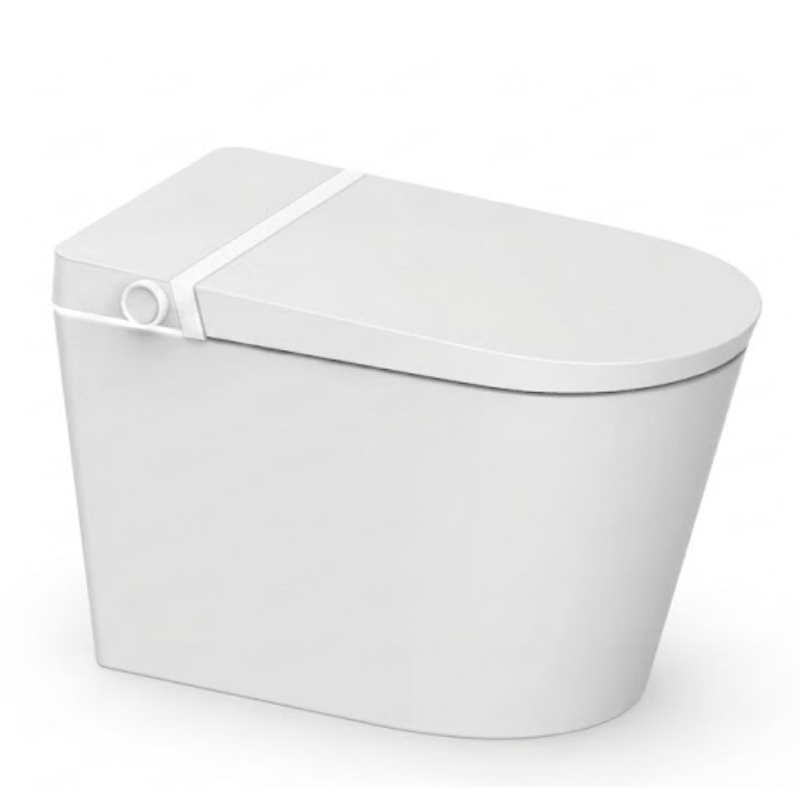
These three products can all appear in the same showroom, yet they solve different problems.
| Product type | Main structure | Typical smart functions | What the buyer replaces |
|---|---|---|---|
| One piece smart toilet | Integrated toilet body with built-in smart system | Wash, heating, drying, flushing, sensors, or controls according to configuration | The complete toilet |
| Two-piece toilet | Separate tank and bowl assembled during installation | Usually conventional unless paired with a separate bidet seat | Tank and bowl as a toilet set |
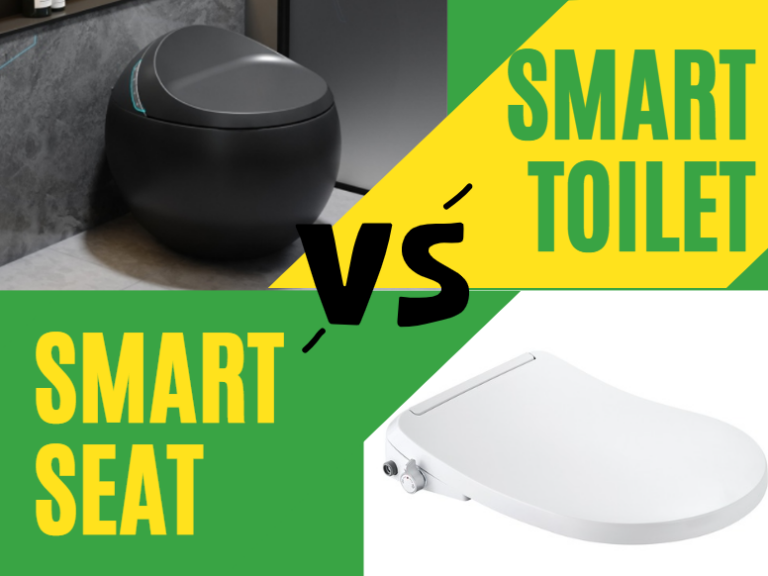
| Smart bidet seat | Electronic seat fitted to a compatible toilet bowl | Wash, seat heat, drying, and controls according to the seat | The seat, while the existing bowl may remain |
A two-piece toilet can be easier to carry because the tank and bowl move separately. It also gives suppliers many familiar bowl, tank, height, and rough-in combinations. A one-piece unit arrives as a larger fixture, so handling and access through doors or stairs deserve more attention.
The integrated body has a different visual effect. There is no exposed tank-to-bowl joint, and the outside may have fewer narrow areas to wipe. That does not make the toilet “self-cleaning,” but it can make routine exterior cleaning more direct.
A smart seat is another valid route. It can add bidet functions without replacing the whole toilet, but fit is not automatic. Bowl shape, fixing-hole spacing, available length, water connection, and power location all matter. A fully integrated smart toilet avoids that seat-and-bowl matching step because the system is designed as one product.able length, water connection, and power location all matter. A fully integrated smart toilet avoids that seat-and-bowl matching step because the system is designed as one product.
How a one piece smart toilet changes the daily routine
The easiest way to judge smart functions is to follow one normal use cycle instead of reading a long feature list.
You approach the toilet. A model with a proximity sensor may open the lid, while a simpler model waits for manual opening. After use, the bidet wand extends for rear or front washing. Water temperature, pressure, and nozzle position may be adjustable. Some models add oscillating movement, which moves the spray across a wider area, or pulsating flow, which changes water pressure in a repeating pattern.
Aerated, pulsating, and oscillating describe different spray behaviors, not a universal performance standard. Two models may use similar terms for settings that feel different in practice.
After washing, a full-electric model may provide warm-air drying. The seat may stay heated at a selected level, or it may use an energy-saving schedule. Flushing can be manual, remote-controlled, foot-activated, or automatic. If automatic lid and flush functions are included, the user touches fewer surfaces.
Not every extra function carries the same value. Warm-water washing, stable spray adjustment, seat heat, drying, and a clear backup control affect the main routine. A night light can be useful in a dark bathroom. App control may matter to some buyers but add little for a hotel guest who will use the toilet once. A long feature list is not the same as a well-chosen feature package.
The most useful functions are the ones people can understand
If you are choosing products for a retail display, hotel, or apartment project, start with the functions a user can understand without training.
- Front and rear wash: separate cleaning modes with adjustable water flow.
- Instant water heating: water is heated as needed instead of being stored in a small warm tank.
- Heated seat: adjustable seat temperature for comfort in cooler rooms.
- Warm-air drying: air flow after washing, with performance depending on temperature, fan design, and drying time.
- Self-rinsing nozzle: an automatic rinse before or after use; it supports routine hygiene but does not remove the need for manual care.
- Power-off flushing: a mechanical or backup method that allows flushing when electric comfort functions are unavailable, when included.
Automatic opening, deodorization, memory profiles, UV treatment, voice control, and phone apps can be useful additions. Treat each one as a model-specific option. Connected control is not universal, and two products may use different apps or voice systems.d control exists; they do not mean that every smart toilet supports the same app or voice system.
Plan power, water, drainage, and space as one system
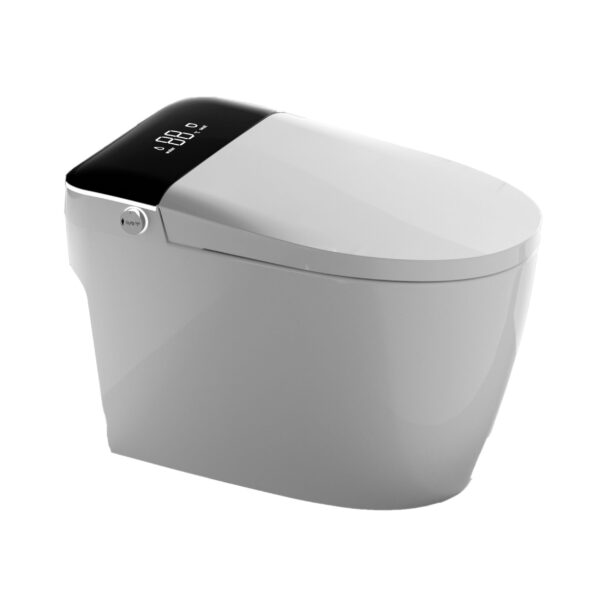
A one piece smart toilet connects bathroom plumbing with an electrical appliance. That is why installation cannot be reduced to a single rough-in number.
Rough-in is the measured distance used to match the toilet outlet to the building drain. For an S-trap floor outlet, it is commonly measured from the finished wall to the drain center. A P-trap exits toward the wall, so its dimensions and connection method are different. The correct drawing must match the actual market configuration.
Power is equally specific. Voltage and frequency must match the destination country. The outlet position must keep the plug and cable practical without placing them where they are crushed, stretched, or exposed to avoidable water. Electrical work in a bathroom must follow local rules and the product instructions. If the room has no suitable protected outlet, use a qualified electrician rather than an extension cord.
Water pressure also affects operation. Some smart toilets use the incoming supply directly for flushing or washing, while others use pumps, reservoirs, or air-assisted systems. The required pressure range belongs to the exact model, not to the category as a whole.
Then check physical space. Measure from the finished wall, not an unfinished surface. Include door swing, nearby cabinets, side clearance for controls, and room for a hand to reach the shutoff valve. One-piece units are heavier and cannot be separated into a tank and bowl for carrying. Use the VLEEO smart toilet installation guide for general planning, then follow the drawing and manual for the selected configuration.
Power cuts reveal the difference between core and optional functions
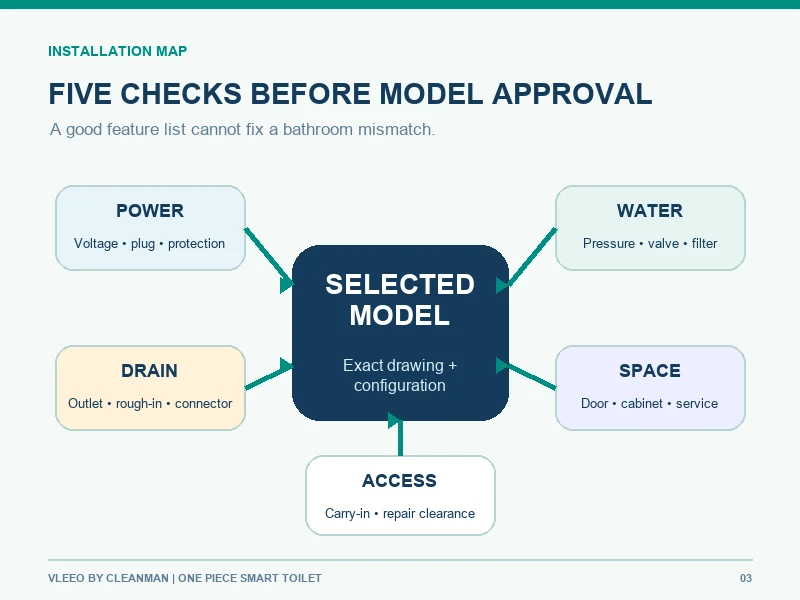
During a power cut, electric heating, drying, sensors, automatic lids, displays, and remote functions may stop. That does not always mean the toilet becomes unusable. Some models include a manual or battery-assisted backup flush. Others depend more heavily on powered operation.
This is a product question, not a reason to reject the whole category.
If the destination has frequent outages, ask exactly what remains available without power. Can the bowl flush? Is there a side button? Does the backup require a battery? Can the lid and seat be moved manually without damage? These answers affect hotels and projects more than a decorative feature that guests may never use.
Cleaning still matters when the toilet has self-cleaning functions
“Self-cleaning” usually describes a specific action, such as rinsing the bidet wand, treating the nozzle, or washing part of the bowl. It does not mean that the whole toilet maintains itself.
For regular care, use a soft cloth and cleaners approved by the manufacturer. Avoid abrasive pads around plastic covers, coated parts, sensors, and control panels. Do not pull or bend a retractable nozzle. Use the nozzle-clean mode to extend it when the manual instructs you to do so.
The product manual is the final guide for approved cleaners, descaling, filter care, and nozzle handling. Do not apply another model’s cleaning routine to the selected toilet.
Hard water needs extra attention. Hard water contains higher levels of dissolved minerals. As water dries, scale can collect around spray openings, filters, valves, and bowl surfaces. The right response depends on the model and local water. A removable inlet filter may need inspection. A nozzle may need an approved cleaning cycle. Some systems may allow descaling, while others warn against acids that can harm seals or electronics.
Do not pour a household descaler into a smart toilet because a general blog recommends it. Follow the exact care instructions for that model.
Service support belongs in the buying decision
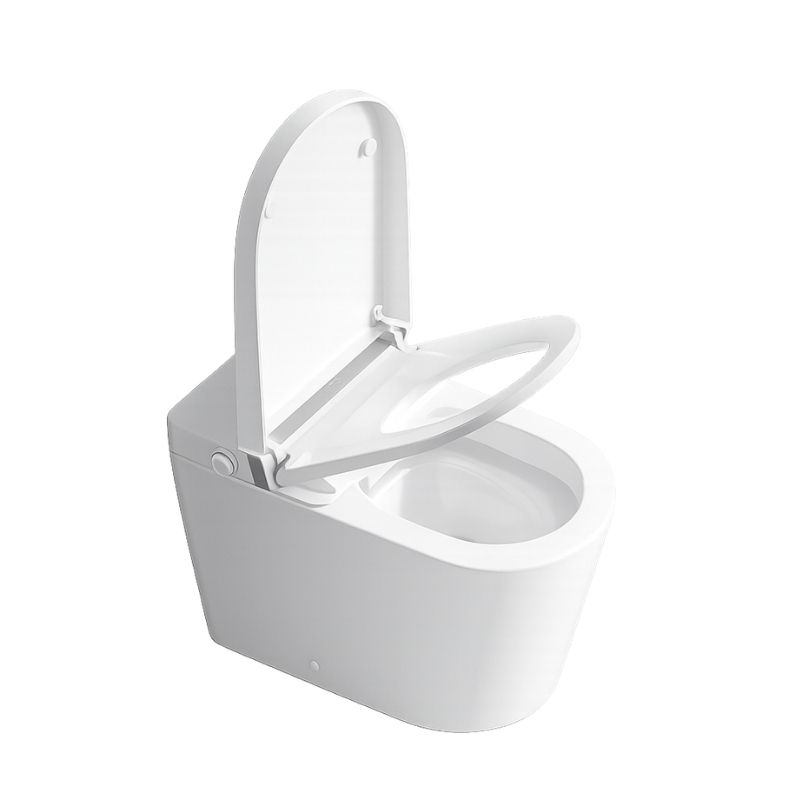
A conventional toilet often uses widely available fill valves, flush valves, seats, and seals. An integrated smart toilet can add a control board, heater, pump, fan, sensors, remote, specialized nozzle, and model-specific wiring. That does not make it unreliable by definition. It means the service plan must match the product.
Before ordering, ask how the main electronic and water-control parts can be replaced. Find out which parts the supplier can ship, how faults are diagnosed, what the warranty covers, and whether manuals or videos are available for local technicians. For a distributor, a spare remote and a clear error-code table may be more valuable than one extra showroom function.
Maintenance timing must follow the actual manual, local water conditions, and level of use. A fixed schedule from another product should not be applied to every model.
Keep purchase records and service notes. If a hotel reports a weak dryer or an error code, the model, production batch, voltage, installation photos, and maintenance history make technical support faster. “The smart toilet does not work” is rarely enough information to solve a problem.
Efficiency claims need a label, test, or exact specification
Smart functions use electricity, and the toilet also uses water for flushing and washing. Actual use depends on the selected settings and how often the product is used. Eco or standby modes may reduce energy use, but buyers should not assume that every model works the same way.
Water-efficiency claims are also market-specific. In the United States, the EPA WaterSense program publishes criteria and information for labeled tank-type toilets. A WaterSense label applies to a certified product, not to every product with a similar flush volume. See EPA WaterSense residential toilets.
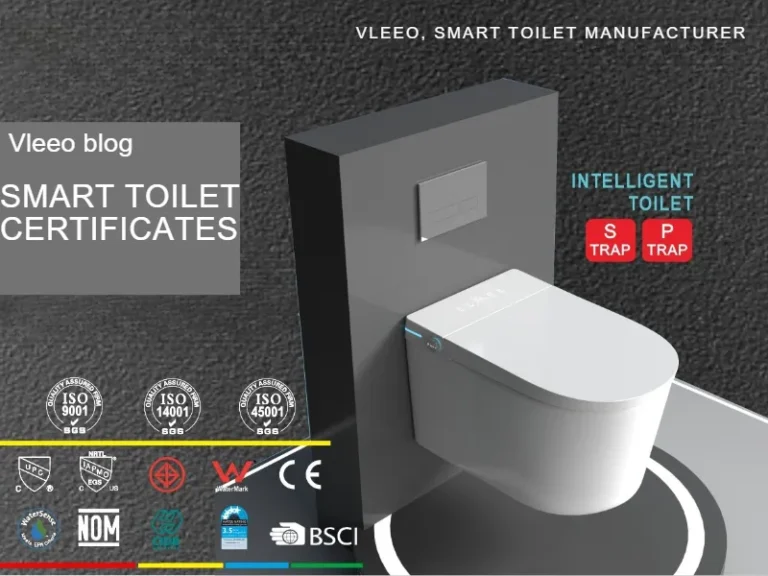
Other markets use different plumbing, electrical, and water-efficiency requirements. Ask for the certificate or test report relevant to the destination and confirm that it covers the exact configuration being ordered. A logo in a brochure is not enough if the model number, voltage, or outlet arrangement does not match.
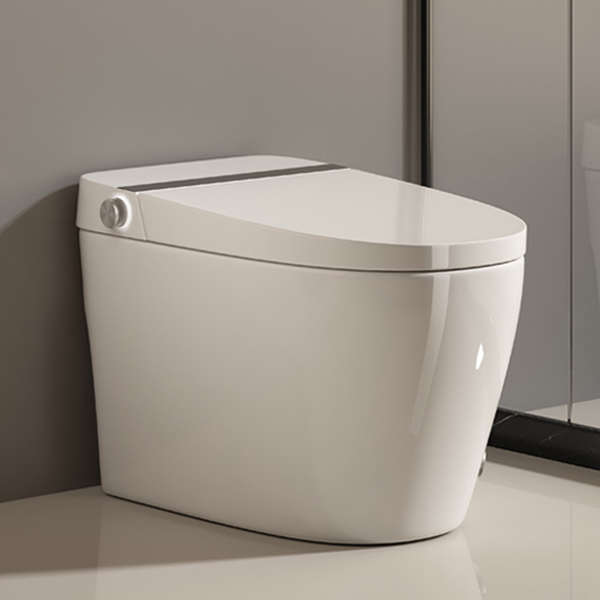
A one piece smart toilet example from VLEEO
VLEEO’s CL-616 full-electric one-piece smart toilet is one example of how the category can be configured. Its published S-trap version combines an integrated floor-standing body with electric wash and comfort functions, automatic or sensor-assisted operation, a remote, and a manual side control. CL-616 is a configurable platform, so the final voltage, trap direction, rough-in, functions, and supplied parts must follow the approved quotation and production documents.
If you want to compare other configurations rather than treat one model as the whole category, review the VLEEO smart toilet range. The useful comparison is not which product has the longest list. It is which confirmed configuration fits the building, user, sales channel, and service plan. Buyers building a broader bathroom assortment can also review the regular toilets and handwash basins supplied by Cleanman Sanitary Ware.
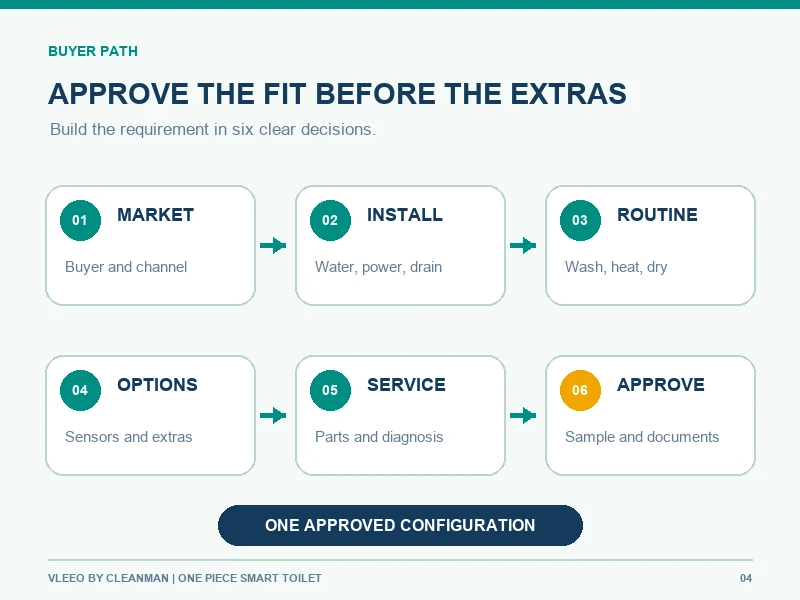
How to choose a one piece smart toilet without chasing features
Start with the room and the main user routine. Then build the feature package around it.
- Define the market. Record the country, voltage, frequency, certification needs, and common drainage layout.
- Define the installation. Confirm S-trap or P-trap, rough-in, water pressure, outlet position, shutoff access, and available space.
- Choose the core routine. Decide whether warm-water wash, heated seat, drying, auto flush, and backup flushing are required.
- Add secondary functions with a reason. A hotel may value simple controls and power-off flushing. A premium retail display may benefit from auto opening or memory settings.
- Plan support. Confirm warranty scope, spare parts, manuals, fault diagnosis, and who will handle service in the destination market.
- Approve one exact configuration. The sample, quotation, specification, artwork, order, and production file should describe the same product.
This sequence prevents a common buying mistake: selecting an impressive online feature list before confirming that the toilet can be installed and supported.
FAQ about one piece smart toilets
1. Is a one-piece smart toilet the same as a bidet seat?
No. A one-piece smart toilet is a complete toilet with an integrated body and built-in smart system. A bidet seat is installed on a compatible toilet bowl and may allow the existing toilet to remain.
2. Does every one-piece smart toilet have warm-air drying?
No. Drying is configuration-specific. Confirm it in the model specification and quotation rather than assuming it from the product shape or category name.
3. Does a one piece smart toilet need electricity?
Most full smart functions, including water heating, seat heating, drying, sensors, and remote controls, need electricity. Some integrated toilets use non-electric wash and flush systems, so the power requirement must be checked by model.
4. Can the toilet flush during a power cut?
Some models include manual, mechanical, or battery-assisted backup flushing. Others depend more on powered systems. Ask what works without electricity and how the backup is activated.
5. Is a one-piece model easier to clean?
The integrated exterior may have fewer exposed joints around the tank and bowl, especially when the trapway is skirted. The bidet wand, seat, bowl, filters, and electronic areas still need care according to the manual.
6. What measurements are needed before ordering?
Confirm trap direction, rough-in, total product dimensions, door and cabinet clearance, water-supply location, power-outlet location, and room for the shutoff valve and installation work.
7. Is hard water a problem for smart toilets?
Mineral scale can affect nozzles, filters, valves, and surfaces over time. Use the model’s approved cleaning and filter instructions, and discuss water treatment when local conditions are severe.
8. What should a B2B buyer request from the supplier?
Request the exact specification, dimension drawing, electrical data, water-pressure range, function list, certification evidence for the destination, packing details, warranty terms, spare-parts plan, and approved production configuration.
The name is short; the buying decision is not
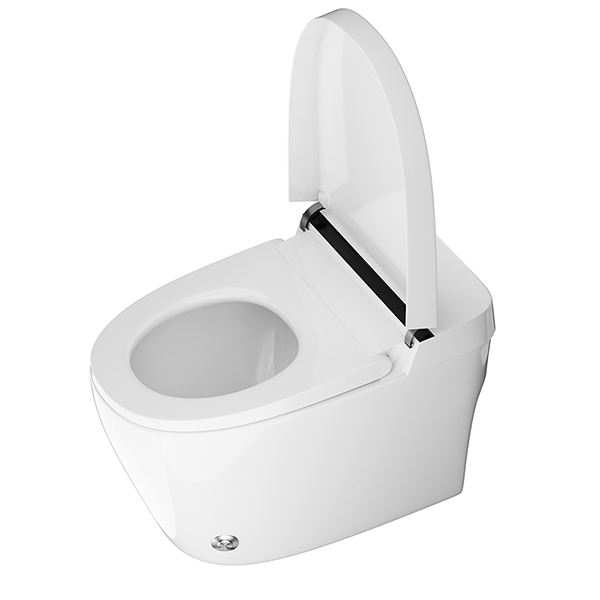
A one piece smart toilet combines an integrated toilet form with a model-specific smart system. That is the definition worth keeping in mind. The one-piece body affects appearance, handling, and cleaning access. The smart package affects comfort, power, control, maintenance, and service.
Choose the product only after those two layers are clear. Then the remote, heated seat, dryer, sensors, and app stop being a random list. They become parts of a toilet that fits a real room and a real support plan. Contact Vleeo and talk about your buying requests now.