-
Guxiang Town, Chaozhou City, Provinz Guangdong, China

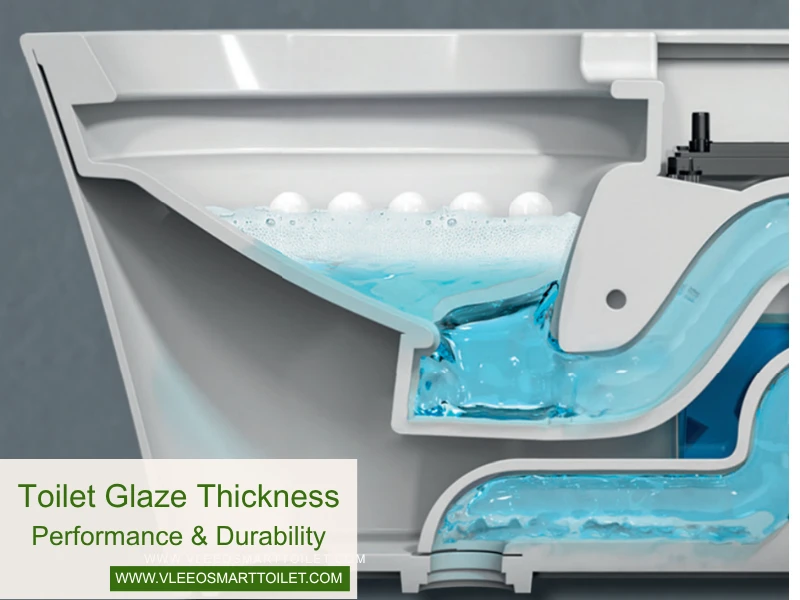
Wie sich die Dicke der Toilettenglasur auf Leistung und Haltbarkeit auswirkt
Wenn man durch eine Fabrik geht oder einen Katalog durchblättert, um das richtige Inventar zu finden, ist es leicht, sich auf die Form, die Spülleistung oder den Preis zu konzentrieren. Aber es gibt ein Detail, das man nicht immer auf den ersten Blick sieht, das aber der wichtigste Faktor dafür ist, wie die Toilette in fünf Jahren aussehen und funktionieren wird: Dicke der Toilettenglasur.
Ich habe viele Jahre in der Sanitärbranche verbracht und gesehen, wie ein winziger Unterschied in der Glasur den Ruf eines Produkts ausmachen oder zerstören kann.
In diesem Leitfaden möchte ich den Vorhang zurückziehen und erklären, warum die Dicke der Glasur wichtig ist. Wir werden uns ansehen, wie sie vor Flecken schützt, warum sie dazu beiträgt, dass die Toilette länger hält, und auf welche Standards Sie achten sollten, wenn Sie Produkte für Ihr Unternehmen importieren.
Was genau ist Glasur?
Bevor wir uns mit den Zahlen befassen, sollten wir definieren, worüber wir sprechen. Glasur ist eine dünne, glasartige Schicht, die während des Brennvorgangs auf den Keramikkörper einer Toilette geschmolzen wird.
Betrachten Sie es als die “Haut” der Toilette.
Ohne Glasur wäre der Keramikkörper porös, d. h. er könnte sich mit Wasser und Gerüchen vollsaugen. Die Glasur versiegelt diese Poren und macht die Oberfläche glatt, wasserfest und leicht abwischbar.
Warum die Dicke der Toilettenglasur alles verändert
Die Dicke dieser “Haut” ist von großer Bedeutung. Wenn die Glasur zu dünn ist, fühlt sich die Toilette rau an und nimmt leicht Flecken auf. Wenn sie richtig gemacht ist, entsteht eine so glatte Oberfläche, dass der Abfall einfach abrutscht.
1. Bessere Fleckenbeständigkeit und einfachere Reinigung
Die Hauptaufgabe einer dicken Glasur ist es, glatt zu bleiben. Hochwertige Toiletten haben in der Regel eine Dicke der Toilettenglasur von 0,8 mm oder mehr.
Eine dickere Schicht ermöglicht es der Glasur, sich beim Brennen perfekt auszugleichen. Das bedeutet, dass es keine winzigen “Spitzen und Täler” gibt, in denen sich Bakterien oder mineralische Ablagerungen verstecken können.
Wenn Sie ein B2B-Einkäufer für ein Hotel oder ein öffentliches Gebäude sind, wissen Sie, dass Reinigungszeit Geld ist. Eine glattere Oberfläche bedeutet, dass Ihr Wartungspersonal weniger Zeit mit Schrubben verbringt und weniger scharfe Chemikalien verwendet.
2. Langlebigkeit gegen Kratzer
Toiletten unterliegen einer starken Beanspruchung. Ständiges Reinigen mit Bürsten und gelegentliches Anstoßen können eine dünne Glasur abnutzen.
Dickere Glasuren wirken wie ein Schutzschild. Sie erhöhen die “Verschleißfestigkeit” der Keramik, was die Toilette vor feinen Kratzern schützt, die sich schließlich in matte Flecken oder dauerhafte Verschmutzungen verwandeln.
3. Verhinderung von Gerüchen
Waren Sie schon einmal in einem Badezimmer, in dem es trotz intensiver Reinigung unangenehm riecht? Manchmal liegt das daran, dass die Glasur zu dünn oder von schlechter Qualität ist.
Wenn Dicke der Toilettenglasur mindestens 0,8 mm beträgt, ist die Wasseraufnahmefähigkeit sehr gering. Dadurch wird verhindert, dass Feuchtigkeit in den Keramikkörper eindringt. Wenn Feuchtigkeit eindringt, kann sie mit der Zeit zu Gerüchen und sogar zu Rissen führen.
Was ist Dicke der Toilettenglasur Standard bei Vleeo?
In unserem Werk halten wir nicht nur die Mindeststandards ein, sondern versuchen, sie zu übertreffen.
Während der nationale Mindeststandard in vielen Regionen oft unter 0,8 mm liegt, ist unser Standard für Dicke der Toilettenglasur liegt zwischen 0,8 mm und 1,1 mm.
Wie können wir das tun?
- Hochspezifische Schwerkraft-Glasur: Wir verwenden eine dichtere Glasurmischung, die es uns ermöglicht, eine dickere Schicht aufzutragen, ohne dass sie verläuft oder absackt.
- 360-Grad-Verglasungslinien: Unsere automatisierten Linien drehen die Toilettenstücke, um sicherzustellen, dass jeder Zentimeter, einschließlich der internen Siphons, eine gleichmäßige Beschichtung erhält.
- Nanotechnologie: In unserem Werkstatt für intelligente Toiletten, verwenden wir häufig Nano-Glasuren. Diese schaffen eine wasserabweisende Oberfläche, die die Reinigung noch einfacher macht.

Der Einfluss der Brenntemperatur
Die Dicke ist nur die Hälfte der Geschichte. Sie müssen auch darauf achten, wie die Glasur gebrannt wird.
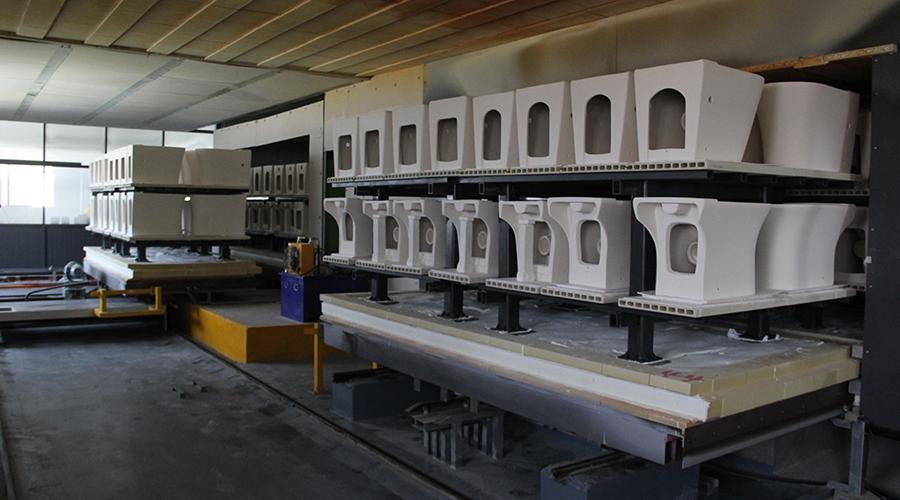
Wir brennen unsere Keramiken bei 1250°C. Bei dieser hohen Hitze verschmelzen die Glasur und der Keramikkörper buchstäblich zu einem festen Stück. Dadurch wird verhindert, dass die Glasur bei der Alterung der Toilette abblättert oder reißt (bekannt als “crazing”).
Verständnis der Industrienormen: GB 6952-2015
Wenn Sie aus China importieren, werden Sie auf den Qualitätsdokumenten häufig den Code “GB 6952” finden. Dies ist die nationale Norm für Sanitärkeramik.
Diese Norm enthält strenge Regeln für:
- Wasserabsorption: Bei hochwertigem Porzellan muss er weniger als 0,5% betragen.
- Äußere Mängel: Dadurch werden Dinge wie “Nadellöcher” oder “Glasurblasen” eingeschränkt.
- Belastbar: Eine Standardtoilette muss 3,0 kN (ca. 300 kg) halten können, ohne zu brechen.
Bei der Prüfung unserer Produkte verwenden wir Kerosin, um versteckte Risse im Scherben zu finden, noch bevor die Glasur aufgetragen wird. Nach dem Brennen wird dann jedes Stück unter hellem Licht auf Glasurfehler geprüft.
FAQ über die Dicke der Toilettenglasur
Wenn Sie ein zuverlässiges Unternehmen suchen Hersteller von einteiligen Toiletten, empfehle ich, diese drei Fragen zu stellen:
1. Wie dick ist Ihre durchschnittliche Glasur?
Wenn dort steht “weniger als 0,8 mm”, sieht das Produkt vielleicht jetzt gut aus, aber in einer stark beanspruchten Umgebung wird es nicht so bleiben.
2. Glasieren Sie den inneren Fallschacht?
Viele Hersteller niedriger Standards lassen die “versteckten” Bereiche aus. Wenn der Siphon nicht glasiert ist, bleiben Abfälle hängen, was zu Verstopfungen führt.
3. Wie hoch ist Ihre Brenntemperatur?
1250°C ist der ideale Wert für eine dauerhafte, glasartige Oberfläche.
Schlussfolgerung
Eine Toilette ist eine langfristige Investition. Ob Sie nun einen luxuriösen Wohnkomplex oder ein geschäftiges Bürogebäude ausstatten, die Dicke der Toilettenglasur ist der unsichtbare Held, der alles sauber und hygienisch hält.
Wenn Sie sich für Produkte mit einer Glasur von 0,8 mm bis 1,1 mm entscheiden, haben Sie weniger Beschwerden von Mietern, geringere Wartungskosten und ein Produkt, das jahrzehntelang weiß und hell bleibt.
Wenn Sie Fragen zu unserem Herstellungsprozess haben oder unsere neuesten Entwürfe sehen möchten, wenden Sie sich bitte an uns. Wir helfen Ihnen gerne dabei, das richtige Gleichgewicht zwischen hoher Qualität und wettbewerbsfähigen Preisen zu finden.
Weitere Informationen über die Dicke der Toilettenglasur Links:
- Erfahren Sie mehr über unser keramischer Herstellungsprozess.
- Entdecken Sie unsere neuesten intelligente Toilettenlösungen.