-
Guxiang Town, Chaozhou City, Guangdong-provinsen, Kina

Effektivitet i smarte toiletter: Er smarte toiletter vand- og energieffektive?
Badeværelser bliver ofte ignoreret, når folk taler om at spare vand eller energi.
Men det burde de ikke være.
I de fleste hjem er toiletterne en af de største kilder til det daglige vandforbrug. Over tid kan ineffektivt skyl spild af titusindvis af liter. Dette er grunden til, at intelligent toileteffektivitet er blevet et vigtigt emne for husejere, bygherrer og købere.
Så det egentlige spørgsmål er enkelt:
Er intelligente toiletter faktisk effektive, eller tilføjer de bare mere teknologi til badeværelset?
1. Oversigt over smart toiletteffektivitet
Smart toilet-effektivitet refererer til, hvor effektivt et smart toilet bruger vand og energi samtidig med at ydeevne, hygiejne og komfort bevares.
1.1 Hvad smart toileteffektivitet egentlig betyder
Smart toileteffektivitet handler ikke kun om at bruge mindre vand.
Det inkluderer:
- Lavere vandforbrug pr. skyl
- Reduceret spild af skylning
- Kontrolleret energiforbrug
- Ressourcebesparelser på lang sigt
Et effektivt smart toilet afbalancerer ydeevne og bevarelseIkke det ene på bekostning af det andet.
1.2 Hvorfor smart toiletteffektivitet er vigtig i moderne hjem
Vandknaphed, stigende forsyningsomkostninger og bekymringer om bæredygtighed får husejere til at gentænke badeværelsesinventar.
Et effektivt smart toilet kan:
- Reducer husstandens vandregning
- Lavere miljøpåvirkning
- Opfylder moderne byggestandarder
Derfor er smart toileteffektivitet nu en vigtig beslutningsfaktor, ikke bare en luksusfunktion.
2. Smart toiletteffektivitet og vandforbrug
Vandeffektivitet er den stærkeste og mest dokumenterede fordel ved intelligente toiletter.
2.1 Smarte toiletters vandeffektivitet sammenlignet med traditionelle toiletter
Traditionelle toiletter bruger ofte:
- 3 til 5 liter pr. skylning
- Nogle ældre modeller brugte op til 7 liter pr. skyl
I modsætning hertil bruger moderne intelligente toiletter typisk:
- 0,8 liter pr. skyl til let affald
- 1,6 liter pr. skyl til fast affald
Alene denne forskel forbedrer det smarte toilets vandeffektivitet dramatisk.
Ifølge forskning opsummeret af Stanford Universitets åbne virtuelle assistent-laboratorium, Intelligente toiletter kan reducere vandforbruget med op til 67% sammenlignet med traditionelle toiletter.
2.2 Systemer med dobbeltskyl i vandeffektive, intelligente toiletter
En vigtig funktion bag det intelligente toilets effektivitet er System med dobbeltskyl.
Det giver brugerne mulighed for at vælge:
- En lavvolumen-skyllefunktion til flydende affald
- En skyller med større volumen til fast affald
Denne fleksibilitet forhindrer unødvendigt vandforbrug og forbedrer den samlede effektivitet.
2.3 Sensorbaseret skylning og vandbesparelse i intelligente toiletter
Mange smarte toiletter bruger:
- Bevægelsessensorer
- Skylning med fodsensor
- Automatisk timing af skylning
Disse funktioner:
- Reducer dobbeltskylning
- Sørg for konsekvent vandforbrug
- Forbedre effektiviteten af det daglige smarte toilet
For eksempel en smart toilet på indgangsniveau med fulde funktioner som CL-616 bruger fod-sensor-skylning til at hjælpe brugerne med at spare vand på en naturlig måde.
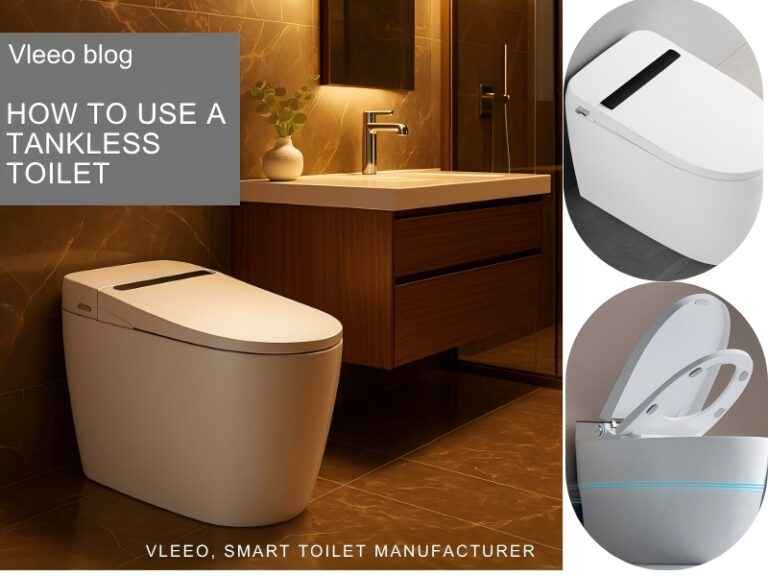
2.4 Tankløst design og smart toiletteffektivitet
Nogle smarte toiletter bruger tankløse eller direkte skylle-designs.
Fordelene omfatter:
- Intet vand opbevaret i en tank
- Mindre tab ved genopfyldning
- Mere præcis skyllekontrol
Tankløse systemer forbedrer effektiviteten af smarte toiletter yderligere, især i miljøer med højt forbrug. Se mere i Vleeo blog.
3. Smart toiletteffektivitet gennem lækagedetektion og -forebyggelse
Lækager er en stor kilde til skjult vandspild.
3.1 Sådan forbedrer lækagesporing effektiviteten af smarte toiletter
Mange intelligente toiletter har systemer til at opdage lækager:
- Overvåg vandgennemstrømningen
- Opdag unormal brug
- Advar brugerne tidligt
Tidlig opdagelse forhindrer vandtab på lang sigt og beskytter den samlede effektivitet.
4. Effektivitetsstandarder for intelligente toiletter og overholdelse af EPA WaterSense
Effektivitet er ikke kun et designmål. Det er også reguleret.
4.1 EPA WaterSense og Smart Toilet Efficiency
I USA er Agentur for miljøbeskyttelse (EPA) kører den WaterSense-programmet.
For at kvalificere sig skal toiletterne:
- Brug ikke mere end 1,28 liter pr. skyl
- Opfyld præstationsstandarder for fjernelse af affald
Mange moderne intelligente toiletter er designet til at opfylde eller overgå disse krav.
4.2 Hvorfor compliance understøtter langsigtet effektivitet
Compliance sikrer, at et smart toilet:
- Sparer vand uden at gå på kompromis med ydeevnen
- Opfylder bygge- og inspektionskrav
- Forbliver effektiv i hele sin levetid

5. Energieffektivitet i smarte toiletter forklaret
Intelligente toiletter bruger elektricitet, men energiforbruget er som regel kontrolleret og begrænset.
5.1 Energibesparende tilstande og smart toiletteffektivitet
De fleste smarte toiletter indeholder:
- Standby-tilstande
- Søvnfunktioner
- Planlagt opvarmning
Disse funktioner reducerer strømforbruget under inaktivitet og understøtter det intelligente toilets generelle effektivitet.
5.2 Varmeelementer og energieffektivitet i intelligente toiletter
Varmeelementer bruges til:
- Opvarmede sæder
- Varmt bidetvand
Moderne design:
- Aktiver kun, når det er nødvendigt
- Tillad justering af temperatur
- Brug minimalt med elektricitet
Denne målrettede brug holder energiforbruget nede.
5.3 Koncepter for vedvarende energi i intelligent toiletdesign
Nogle avancerede koncepter udforsker mulighederne for vedvarende energi, f.eks. solcelleanlæg.
Selv om de endnu ikke er almindelige, viser disse ideer retningen for fremtidige forbedringer af effektiviteten på intelligente toiletter.
6. Smart toiletteffektivitet ud over skylning
Effektivitet går ud over vand pr. skyl.
6.1 Bidetfunktioner og smart toilets vandeffektivitet
Indbyggede bidetfunktioner reducerer brugen af toiletpapir.
Det er vigtigt, fordi der produceres toiletpapir:
- Bruger store mængder vand
- Kræver energikrævende forarbejdning
Ved at reducere papirforbruget forbedres den samlede miljøpåvirkning fra et smart toilet.
7. Smart toilets samlede effektivitet og miljøpåvirkning
Når vand- og energifaktorer kombineres, giver intelligente toiletter ofte en nettoeffektivitetsfordel.
7.1 Balance mellem vandbesparelser og energiforbrug
Selvom smarte toiletter bruger strøm:
- Vandbesparelser er ofte meget større
- Energiforbruget styres af standby-tilstande
- Reduceret papirforbrug kompenserer for indirekte ressourceforbrug
For mange husholdninger er den samlede effektivitet af intelligente toiletter højere end traditionelle toiletter.
8. Beviser, der understøtter effektiviteten af intelligente toiletter
Forskningen i din uploadede fil indeholder flere understøttende studier.
8.1 Undersøgelser af intelligente toiletters vandeffektivitet
De vigtigste resultater omfatter:
- Traditionelle toiletter: op til 7 liter pr. skyl
- Smarte toiletter: så lavt som 0,5-1,6 liter pr. skylning
Over en 20 års levetidet smart toilet kan spare omkring 66.000 liter vand sammenlignet med almindelige toiletter.
8.2 Forbedringer af ydeevne og effektivitet
De første toiletter med lav gennemstrømning havde problemer med ydeevnen.
I dag:
- EPA's præstationsstandarder er højere
- Designet er mere pålideligt
- Effektivitet betyder ikke længere svag skylning
9. Udfordringer, der påvirker effektiviteten af smarte toiletter
Intelligente toiletter har også begrænsninger.
9.1 Bekymringer om ydeevne
Nogle brugere er stadig bekymrede:
- Skyllestyrke
- Pålidelighed
Moderne design er blevet bedre, men opfattelsen er stadig en faktor.
9.2 Omkostninger til vedligeholdelse
Intelligente toiletter indeholder elektroniske dele.
Det kan betyde:
- Højere reparationsomkostninger
- Udskiftning af dele over tid
9.3 Brugeroplevelse og indlæringskurve
Kontrolpaneler og indstillinger kan:
- Forvirrer nogle brugere
- Kræver en kort indlæringsperiode
9.4 Afhængighed af energi
Avancerede funktioner er afhængige af elektricitet.
Under strømafbrydelser:
- Grundlæggende skylning virker ofte
- Smarte funktioner kan sætte på pause
9.5 Startomkostninger vs. langsigtet effektivitet
Smarte toiletter koster mere på forhånd.
Men vandbesparelser, reduceret papirforbrug og effektivitetsgevinster kan opveje omkostningerne over tid.
10. Fremtidige tendenser inden for smart toiletteffektivitet
Markedet for intelligente toiletter vokser støt.
10.1 Markedsvækst og brancheudsigter
Ifølge en global markedsprognose offentliggjort på Finans Yahooblev markedet for intelligente toiletter vurderet til USD 10,11 milliarder i 2024 og forventes at nå op på 16,09 milliarder dollars inden 2030med en CAGR på ca. 8%.
10.2 Teknologiske fremskridt
Fremtidige forbedringer kan omfatte:
- Funktioner til sundhedsovervågning
- Smartere energistyring
- Analyse af brug
10.3 Bæredygtighed og forbrugertrends
Efterhånden som reglerne for vandeffektivitet strammes, forventes efterspørgslen efter effektive, intelligente toiletter at stige.
OFTE STILLEDE SPØRGSMÅL: Effektivitet i smarte toiletter
Q1. Er intelligente toiletter effektive sammenlignet med traditionelle toiletter?
Ja, smarte toiletters effektivitet er betydeligt højere på grund af lavere vandforbrug og kontrolleret energiforbrug.
Q2. Hvordan kan intelligente toiletter reducere vandforbruget?
Gennem systemer med dobbeltskyl, sensorer og lækagesøgning.
Q3. Omfatter smart toileteffektivitet også energieffektivitet?
Ja. Smart toileteffektivitet omfatter både vand- og energistyring.
Q4. Er vandeffektive, intelligente toiletter prisen værd?
For mange husholdninger retfærdiggør de langsigtede besparelser investeringen.
Q5. Hvad påvirker smart toilet effektivitet i daglig brug?
Brugervaner, vedligeholdelse og korrekt brug af funktioner er alt sammen vigtigt.
Endelig konklusion
Smart toileteffektivitet er ikke bare et marketingudtryk.
Baseret på beviserne i din oprindelige rapport, smarte toiletter:
- Sparer betydelige mængder vand
- Administrer energiforbruget omhyggeligt
- Støt langsigtet bæredygtighed
Når de vælges og bruges korrekt, er de en praktisk opgradering af moderne badeværelser.
Intelligente toiletter er ikke perfekte.
Men baseret på beviserne i din oprindelige rapport tilbyder de det:
- Stærk vandeffektivitet
- Kontrolleret energiforbrug
- Betydningsfulde langsigtede besparelser
Når de vælges med omhu, er de et praktisk skridt i retning af mere effektive og moderne badeværelser.