-
Guxiang Town, ciudad de Chaozhou, provincia de Guangdong, China

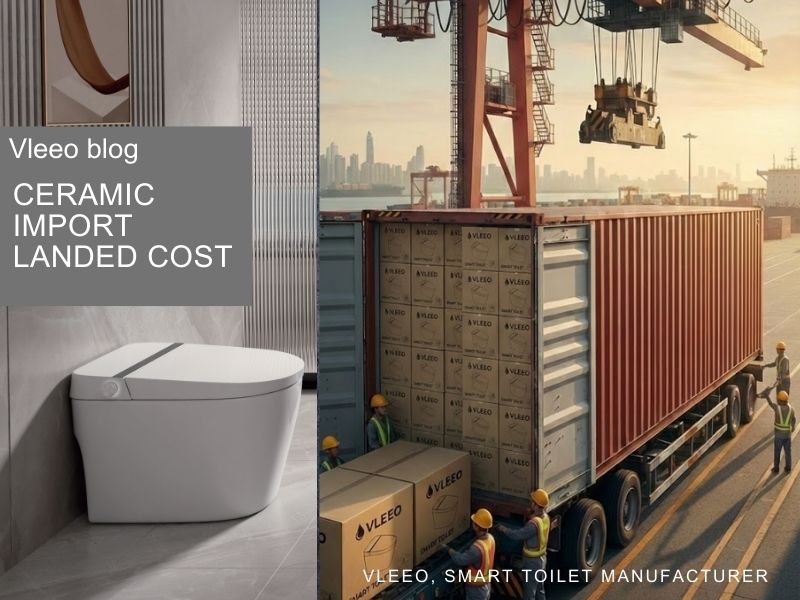
Coste de importación de cerámica: Guía 2026 para compradores B2B
1. Introducción: La matemática invisible del aprovisionamiento global
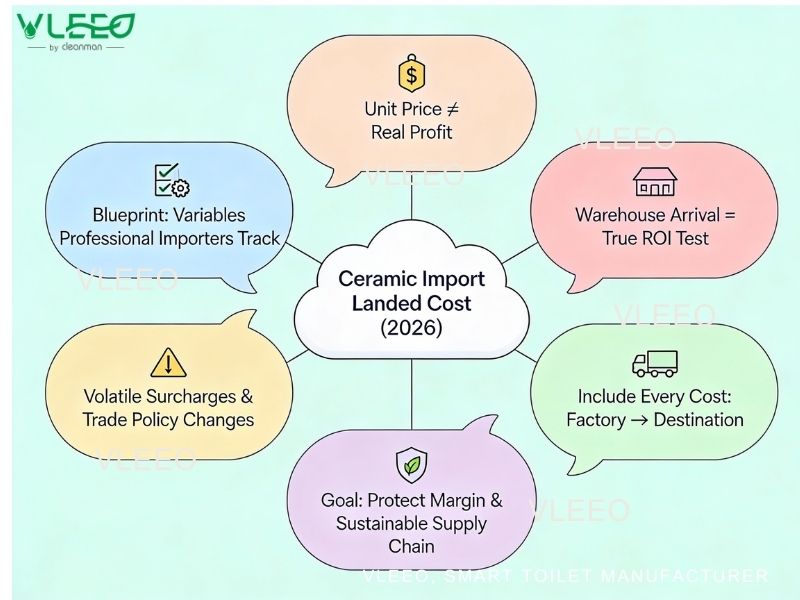
Calcular un Importación de cerámica Coste desembarcado es el paso más crítico para los compradores B2B internacionales que buscan mantener una cadena de suministro rentable desde China en 2026. Para los distribuidores de gran volumen, los promotores inmobiliarios y los mayoristas de fontanería, el "precio unitario" que figura en una factura proforma no es más que una métrica de vanidad.
La verdadera prueba de rentabilidad se produce cuando la mercancía llega a su almacén. Para determinar su verdadero retorno de la inversión y establecer márgenes minoristas que garanticen la sostenibilidad del negocio a largo plazo, debe contabilizar cada céntimo gastado desde la fábrica en China hasta su destino final. En una época de fluctuaciones de los recargos energéticos y de evolución de las políticas comerciales, dominar su Importación de cerámica Coste desembarcado es la delgada línea que separa un año de gran crecimiento de un déficit logístico. Este plan desmenuzará las variables que utilizan los importadores profesionales para dominar sus mercados.
2. Un legado del comercio mundial: la evolución de la logística cerámica
La historia de la cerámica es, fundamentalmente, una historia de la logística. Para entender la Importación de cerámica Coste desembarcado, debemos analizar cómo China se convirtió en la "capital mundial de la cerámica".
2.1 La Ruta Marítima de la Seda y la logística del lastre
Desde la dinastía Tang, la cerámica china ha sido una mercancía mundial. Históricamente, la porcelana se utilizaba como "lastre", colocada en el fondo de los barcos de madera para proporcionar peso y estabilidad a cargamentos más ligeros como la seda y el té. Esta primera forma de optimización de los contenedores significaba que la cerámica viajaba a menudo con un coste de flete "subvencionado". Hoy en día, aunque ya no utilizamos los retretes como lastre para los barcos, el principio de mezclar pesos y volúmenes sigue siendo la piedra angular de una importación rentable.
2.2 El cambio industrial a la China vítrea
La producción cerámica moderna ha evolucionado desde las artes decorativas hasta los artículos sanitarios de alto rendimiento. Las fábricas de Chaozhou utilizan ahora hornos de túnel automatizados que cuecen a 1280°C. Esta temperatura es crucial porque crea la "porcelana vítrea", un material con una absorción de agua inferior a 0,5%. Para el importador, esta durabilidad técnica se traduce en un menor riesgo a largo plazo de que el producto falle, lo que protege el pilar del "riesgo de calidad" de la fórmula del coste en destino.
Antes de sumergirnos en las matemáticas del Importación de cerámica Coste desembarcadoes esencial comprender la "base de valor" de su fuente. China ha sido el epicentro del comercio mundial de cerámica durante más de un milenio.
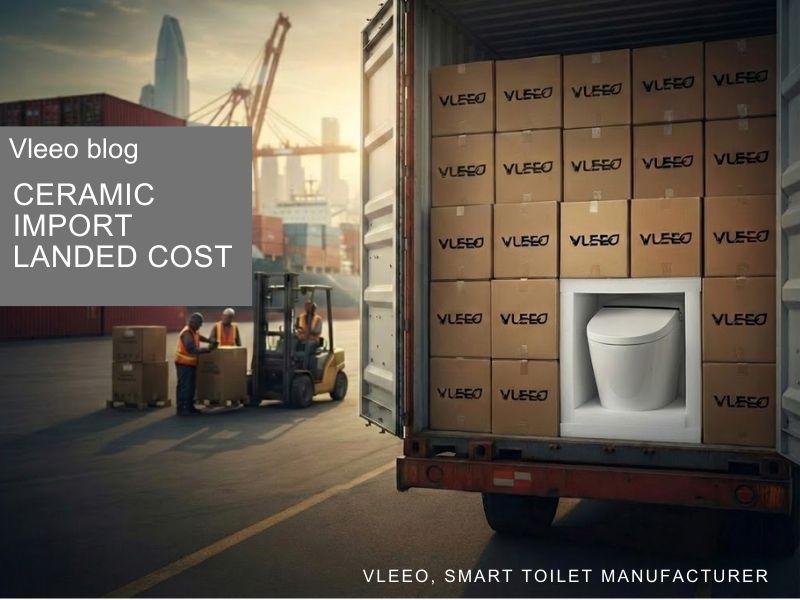
2.1 La logística cerámica, una tradición milenaria
Desde la Ruta Marítima de la Seda hasta los modernos hornos automatizados, la experiencia de China en el transporte de porcelana frágil no tiene parangón. Históricamente, la cerámica se utilizaba como "lastre" en los cascos de los galeones de madera, aportando el peso necesario para estabilizar los barcos que transportaban mercancías más ligeras y de gran valor, como la seda. Hoy en día, aunque ya no utilizamos los baños como lastre, ese legado de optimización logística permanece. Fábricas modernas como Vleeo combinar este conocimiento material ancestral con la automatización de la Industria 5.0.
2.2 El moderno centro industrial: Chaozhou y más allá
En 2026, la eficiencia de estos centros repercutirá directamente en su Importación de cerámica Coste desembarcado. Las agrupaciones de alta densidad de proveedores de materias primas, fabricantes de envases y puertos de categoría mundial (como Xiamen y Shenzhen) permiten a las fábricas chinas mantener precios competitivos a pesar de la inflación mundial.
3. Los 5 pilares de la fórmula del coste en destino para 2026
Coste en destino = (Coste del producto + Flete + Aduanas y aranceles + Seguro + Manipulación local + Riesgo de calidad)
3.1 Coste del producto: Comprender el espectro de precios
El primer componente de su Importación de cerámica Coste desembarcado es el precio unitario FOB (franco a bordo).
- La gama para cerámica estándar: En el caso de los inodoros cerámicos normales, el precio FOB unitario suele oscilar entre 1.000 y 1.000 euros. $30 a $90.
- Acabado y variaciones estéticas: Esta gama abarca tanto los Blanco brillante modelos (la materia prima de gran volumen del sector) y premium Colores mates. Los acabados mates suelen situarse en el extremo superior de este espectro porque requieren una mayor precisión técnica durante la fase de esmaltado para garantizar que la superficie siga siendo resistente a las manchas y táctil sin un sellado brillante tradicional.
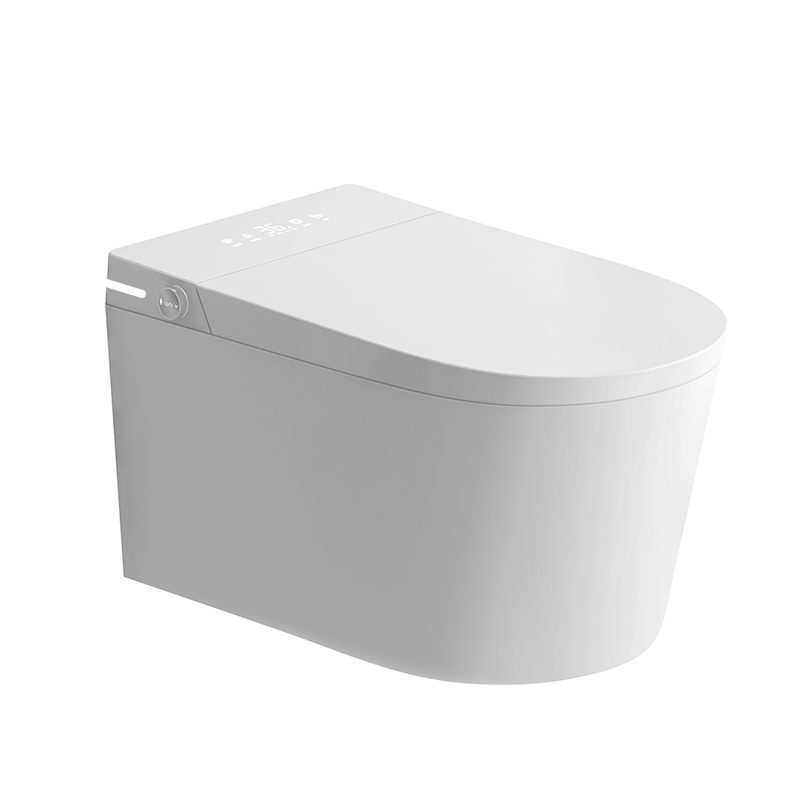
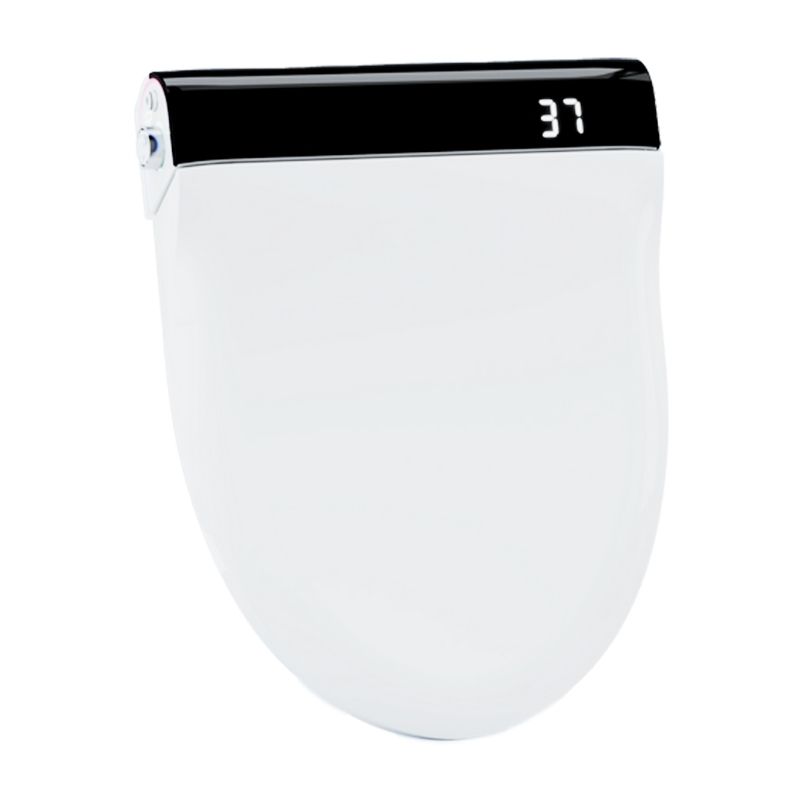
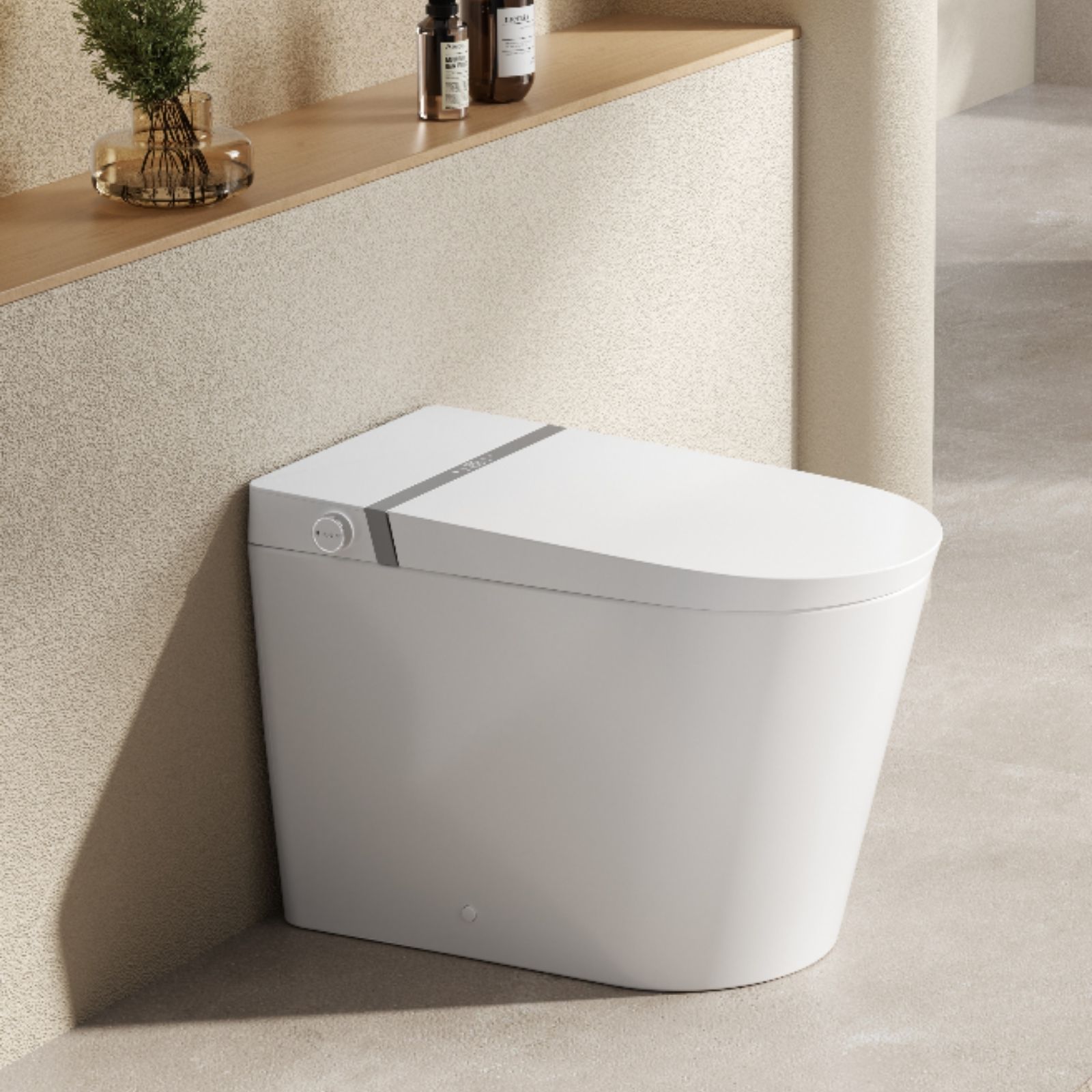
- Ingeniería de valor para aseos inteligentes: Unidades inteligentes, como el Inodoro Smart de 10 pulgadas CL-721La industria electrónica y la cerámica de lujo se reúnen en un único CBM. Aunque la inversión inicial es mayor, la "densidad de beneficios" por contenedor se optimiza significativamente. Esencialmente, usted está enviando más valor en el mismo volumen, que es la forma más eficaz de compensar las altas tarifas de flete marítimo.
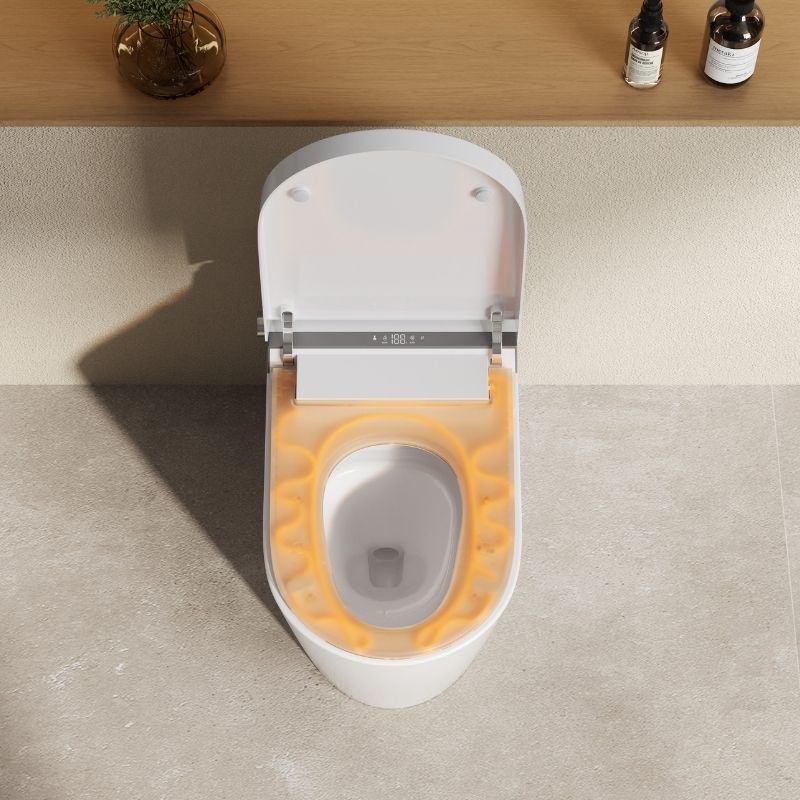
3.2 Transporte de mercancías y logística: La optimización "Top-Space" de CBM
El flete marítimo es una variable enorme en su Importación de cerámica Coste desembarcado. Las cerámicas son mercancías de alta densidad que a menudo alcanzan los límites de peso antes que los de volumen en un contenedor 40HQ.
- Estrategia de mezcla estratégica: Recomendamos utilizar el "aire muerto" en la parte superior de un contenedor 40HQ añadiendo productos más ligeros y de alto valor como Asientos de inodoro inteligentes o Lavabos de cerámica.
- Estabilidad estructural y prevención de roturas: Además de reducir el coste de flete por artículo, rellenar el hueco superior garantiza que el contenedor esté bien apretado. Un contenedor lleno y bien arriostrado es un requisito fundamental para el transporte seguro de cerámica. Cuando un contenedor está lleno, evita que las cajas se desplacen, "salten" o se deslicen durante un tránsito marítimo agitado o movimientos bruscos durante la manipulación portuaria. Al eliminar el espacio vacío, se crea una carga autoportante que protege la integridad estructural de cada caja del envío, lo que reduce eficazmente el coste del riesgo de calidad.
3.3 Aduanas, derechos y conformidad con el HTS
Utilizar un código HTS (Harmonized Tariff Schedule) incorrecto puede dar lugar a una "sanción por clasificación errónea" o a derechos antidumping inesperados que pueden arruinar sus márgenes.
- Código primario: 6910.10.00 es la norma mundial para sanitarios de cerámica.
- Documentación y conformidad: Asegúrese de que su fábrica proporciona documentos de conformidad precisos, incluidos el conocimiento de embarque, la lista de empaque y los certificados de origen. Los retrasos portuarios son un "impuesto sobre el coste en destino" oculto. Un retraso de sólo tres días debido a errores de papeleo puede añadir cientos de dólares en tasas de sobrestadía, que a menudo no se tienen en cuenta en los presupuestos iniciales.
3.4 Seguros: Proteger el activo de gran valor
Dado que todas las cerámicas son intrínsecamente frágiles, los seguros (normalmente 0,3%-0,7% de CIF) es un componente obligatorio de su modelo de costes totales.
- Gestión de riesgos: Aunque Vleeo ofrece un embalaje superior, el tránsito marítimo implica riesgos como la "Avería Gruesa" o condiciones meteorológicas extremas. Incluir un seguro a todo riesgo garantiza que un percance en el mar no suponga la pérdida total de su inversión. Con nuestro espuma protectora y cartones de 7 capas, su seguro es su última red de seguridad, no su primera línea de defensa.
3.5 Manipulación local: Costes de la "última milla
Su Importación de cerámica Coste desembarcado debe incluir el drayage (transporte del contenedor desde el muelle) y el de-vanning (la labor de descarga).
- Eficiencia en el almacén: Nuestro embalaje uniforme y de alta resistencia está diseñado para facilitar el uso de carretillas elevadoras. Esto permite a su equipo de almacén local apilar y organizar el inventario 20% más rápido de lo que lo harían con un embalaje endeble y no estándar, reduciendo directamente sus gastos de mano de obra local.
3.6 Riesgo de calidad: el paquete de protección
El riesgo de calidad es el "impuesto oculto". Si 3% de sus unidades llegan rotas, su coste por el inventario vendible aumenta considerablemente.
- La solución: Utilizamos Cajas de cartón ondulado reforzado de 7 capas combinado con una protección Espuma.
- Por qué la espuma es esencial: Nuestra espuma se moldea a medida según las dimensiones tridimensionales exactas del inodoro. La espuma se elige por su excelente absorción de impactos y rigidez estructural. Crea una cuna protectora que suspende la unidad cerámica de las paredes de la caja. Esto absorbe la energía cinética de las caídas o vibraciones durante el transporte, garantizando que incluso los inodoros electrónicos inteligentes más sensibles lleguen en perfectas condiciones de funcionamiento. Este enfoque de ingeniería convierte la variable "Riesgo" en una constante predecible.
4. Por qué el embalaje es su mejor seguro: La norma de las 7 capas
En 2026, la industria mundial del transporte marítimo es más rápida pero más áspera. Las cajas estándar de 5 capas son insuficientes para la cerámica pesada.
- Fuerza de aplastamiento: Nuestra estructura de 7 capas proporciona una resistencia superior al aplastamiento vertical (ECT - Edge Crush Test), que es vital cuando las cajas se apilan a 4 ó 5 alturas en un contenedor 40HQ.
- Cobertura financiera: Invirtiendo en espuma protectora Elimina la necesidad de logística de sustitución local, un coste que puede ser 5 veces superior al precio original de fábrica debido a las tarifas de envío LTL individuales y a la urgencia de la demanda del cliente.
5. Proyecciones de costes de importación de cerámica para 2026
Estimación para un contenedor 1x40HQ desde Chaozhou a un importante puerto mundial.
| Componente de coste | Inodoros estándar y mate | Inodoro inteligente Vleeo (electrónico) |
| Precio unitario FOB | $30.00 – $90.00 | $75 – $300 |
| Flete marítimo (por unidad) | $12.50 | $14.50 |
| Embalaje de 7 capas | Cartón de 7 capas | 7-caja de cartón& Espuma protectora |
| Derechos de importación (Est. 10%) | $3.50 – $9.20 | $28.50 |
| Manipulación y transporte local | $2.50 | $4.50 |
| Total Est. Coste desembarcado | $48.00 – $126.00 | $101.50 – $349.00 |
6. Dominio mundial de las normas y la certificación
Para proteger su Importación de cerámica Coste desembarcado de retrasos legales o incautaciones, el cumplimiento no es negociable. Vleeo se encarga de las pruebas primarias en fábrica para garantizar una entrada sin problemas en estos importantes mercados:
- América del Norte: cUPC / EPA WaterSense / DOE.
- Europa: CE / RoHS / EN 997.
- Australia: WaterMark / WELS.
7. FAQ: Navegar por su coste de importación de cerámica desembarcada
8 preguntas sobre el coste del desembarque de importaciones de cerámica
P1: ¿Cómo afectan los acabados mate al coste total en destino?
A1: La cerámica mate se sitúa en el extremo superior de la gama FOB ($35-$92) porque requiere una mayor precisión técnica a 1280°C para garantizar una superficie resistente a las manchas. Sin embargo, los componentes de flete y derechos siguen siendo los mismos que los del blanco brillante, lo que los convierte en una opción de alto margen para los distribuidores.
P2: ¿Puedo mezclar inodoros y lavabos inteligentes en un mismo contenedor?
A2: Sí. Esta es la forma más eficaz de optimizar su Importación de cerámica Coste desembarcado. Un contenedor lleno y mezclado es más estable estructuralmente y evita que el producto se desplace durante los 30 días de viaje por mar.
P3: ¿Por qué la cocción a 1280 °C es la norma industrial en Chaozhou?
A3: Garantiza un índice de absorción de agua inferior a 0,5% (Vitreous China) y crea un esmalte superior más fácil de limpiar, resistente a los arañazos y estéticamente superior para proyectos B2B de lujo.
P4: ¿El precio incluye el embalaje de espuma?
A4: Sí, para los productos Vleeo, nuestros precios de exportación incluyen el Cartón de 7 capas y espuma protectora como norma. Creemos que el envasado no debe ser un "añadido", sino una parte fundamental de la calidad del producto.
P5: ¿Cuál es la ventaja de abastecerse en Chaozhou en comparación con otras ciudades?
A5: Chaozhou es la ciudad mundial de la cerámica. Ofrece el ecosistema de cadena de suministro más maduro, lo que se traduce en un mejor control de calidad, diseños más innovadores y precios FOB globales más bajos para el comprador.
P6: ¿Cómo calculo el coste de transporte por unidad si mezclo artículos?
A6: Se calcula por CBM (metro cúbico). Dado que los inodoros ocupan más espacio y los lavabos menos, mezclarlos permite llenar el contenedor hasta su máxima capacidad volumétrica, lo que reduce el coste medio del flete de todo el envío.
P7: ¿Las cajas de cartón de 7 capas aumentan el peso del contenedor?
A7: El aumento de peso es insignificante comparado con el peso de la cerámica, pero la protección que proporciona contra la "Compresión Vertical" es enorme, asegurando que no pierda inventario por el colapso de la caja.
P8: ¿Se gravan los inodoros inteligentes de forma diferente a los normales?
R8: En general, se clasifican en el mismo código HTS (6910.10.00), ya que se trata principalmente de accesorios de cerámica. Sin embargo, debe asegurarse de que su intermediario incluya las funciones de bidé en la descripción para garantizar la plena conformidad.
8. Conclusión: Sourcing escalable con Vleeo
Calcular su Importación de cerámica Coste desembarcado es una ciencia que combina ingeniería, logística y finanzas. Desde la cocción a 1280 °C en nuestros hornos de Chaozhou hasta la optimización del embalaje de protección y los contenedores con cargas mixtas de Inodoros inteligentes y LavabosVleeo se dedica a su cuenta de resultados.
El éxito en 2026 requiere algo más que un proveedor; requiere un socio fabricante que comprenda su coste total de propiedad y le ayude a maximizar cada metro cúbico de su inversión.
Póngase en contacto con Vleeo hoy mismo para obtener una factura proforma detallada y un plan personalizado de carga de contenedores diseñado para optimizar sus márgenes.