-
مدينة قوشيانغ، مدينة تشاوتشو، مقاطعة قوانغدونغ، الصين

Before You Approve the Sample: What Smart Toilet Sensors Must Get Right
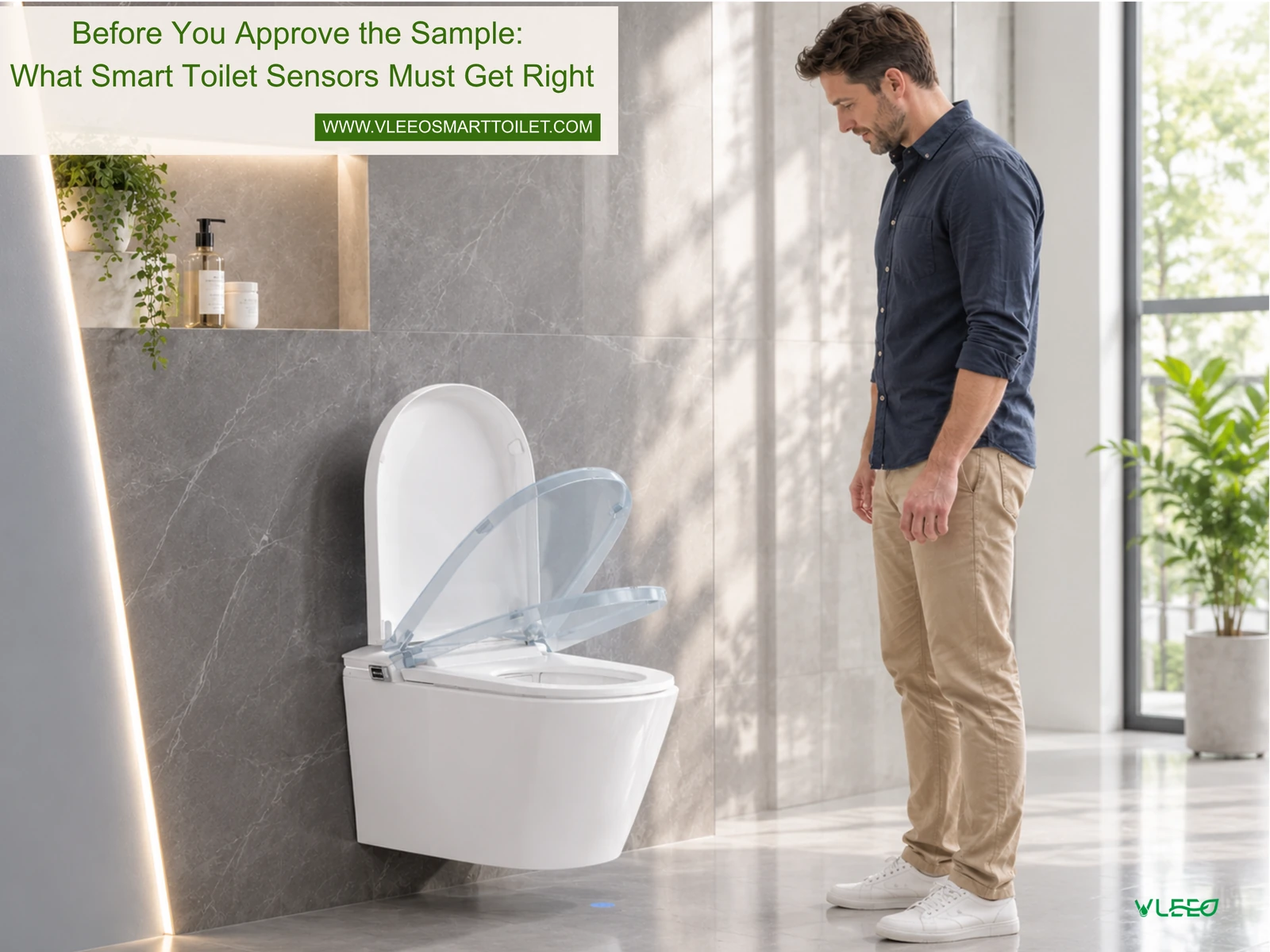
As a buyer comparing smart toilet sensors, you visit a factory showroom and test a sample. You approach it and the lid opens automatically; you sit down and the wash function starts normally; you give a light kick beside the toilet and it flushes at once. Everything works smoothly, without a single mistake. You feel that the product has passed the most direct test, so you order a sample and install it in a real bathroom for final approval.
After installation, things begin to change. A pet passes the doorway and the lid suddenly opens. A man spends longer on the toilet while watching short videos, and the lid unexpectedly closes. A child sits down, but the automatic wash function does not start. Sometimes the toilet responds so slowly that the customer thinks it is broken.
The specification still says “automatic lid opening” and “foot-sensor flushing,” but the real user experience is no longer the same. You now realize that a simple feature called “automatic lid opening” has much more behind it than the feature list suggests.
The Specification Sheet Shows Features, Not Behavior
When you compare quotations, the sensor functions usually look simple. The same three labels appear again and again.
- Automatic lid opening
- Seated detection
- شطف مستشعر القدمين
Those labels tell you what the toilet can do. They do not tell you how reliably it decides when to do it.
An automatic lid needs to distinguish an approaching user from a person crossing the bathroom. A seated sensor needs to distinguish actual use from a hand, towel, or object resting on the seat. A foot sensor needs to recognize a deliberate command without responding to every nearby movement.
The difficult part is not producing a signal. The difficult part is turning that signal into the correct action at the correct time.
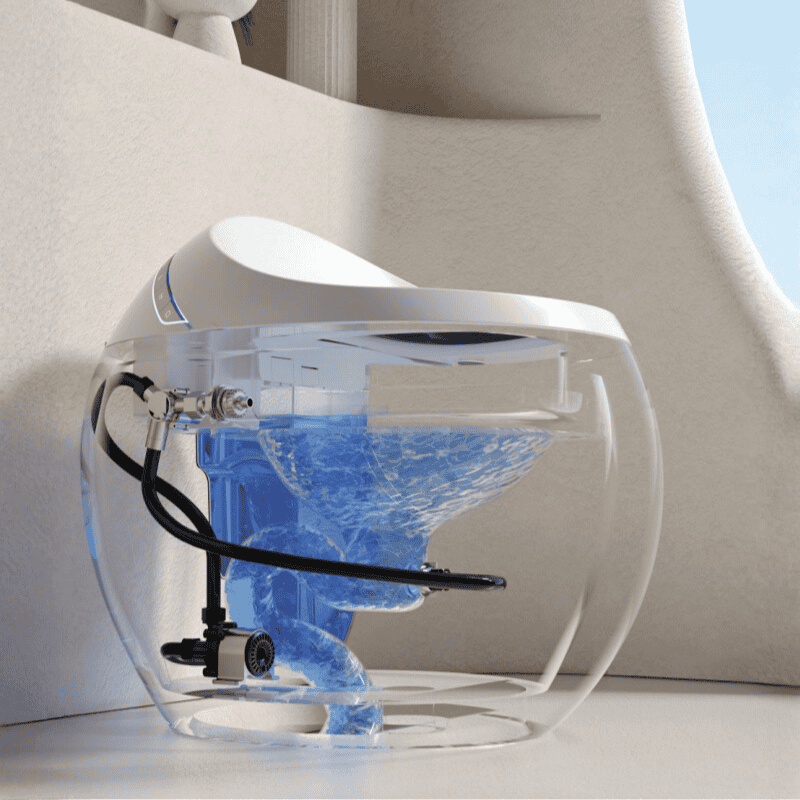
That judgment depends on more than the sensor component. Detection range, mounting position, housing material, software thresholds, response delay, bathroom layout, and the sequence of other functions all matter. Two toilets can use sensors with similar names and still behave very differently after installation.
This is the first purchasing lesson: do not approve a sensor feature because it worked once. Approve the behavior only after it works repeatedly in the situations your customers will create.

Three Sensors, Three Different Jobs
You may initially compare radar, seated sensing, and foot sensing as if they were alternative versions of the same technology. They are not. In a typical smart toilet, they answer different questions.
The approach sensor asks: Is someone coming toward the toilet? The seated sensor asks: Is someone actually using the toilet? The foot sensor asks: Has the user deliberately requested an action? These questions happen at different distances and at different moments. They also carry different risks. An approach sensor may open a lid unnecessarily. A poor seated signal may block a wash function or allow an unsafe sequence. A poor foot-sensor decision may create an unexpected flush.
The product therefore needs more than sensitive sensors. It needs clear boundaries between them.
Radar Is Mainly About Approach and Direction
Radar sensing is useful because it can detect movement without requiring physical contact. Depending on the radar design and its tuning, the controller may use reflected signals to estimate movement, distance, and whether a target is approaching or leaving. Semiconductor suppliers describe 24 GHz radar systems that can detect motion and, with the appropriate configuration, measure direction, speed, or distance. Texas Instruments also lists smart-toilet presence detection and lid movement among practical radar applications.
For a smart toilet buyer, however, the frequency printed on a component list is not the result you are buying. A 10.5 GHz or 24 GHz label does not, by itself, prove that one finished toilet will open more accurately than another.
The finished behavior depends on the antenna, installation angle, enclosure, detection zone, sensitivity settings, controller logic, and the room around the toilet. A more sensitive setting can increase detection distance, but it can also make the toilet react to traffic outside the intended approach path.
That is why the better buyer question is not, “Which radar frequency is best?” It is, “What approach zone has this complete model been tuned for, and how was that zone verified?”
Ask the supplier to demonstrate the toilet from the front, from both sides, and from the bathroom entrance. Walk past without intending to use it. Pause near the basin. Approach slowly. Approach quickly. Let a second person cross behind you. You are looking for a stable decision boundary, not the longest possible range. For additional technical context, Texas Instruments explains how radar is used for smart-toilet presence detectionفي حين أن Infineon describes the motion, direction, and distance capabilities of 24 GHz radar.
Seated Detection Is a Permission Signal
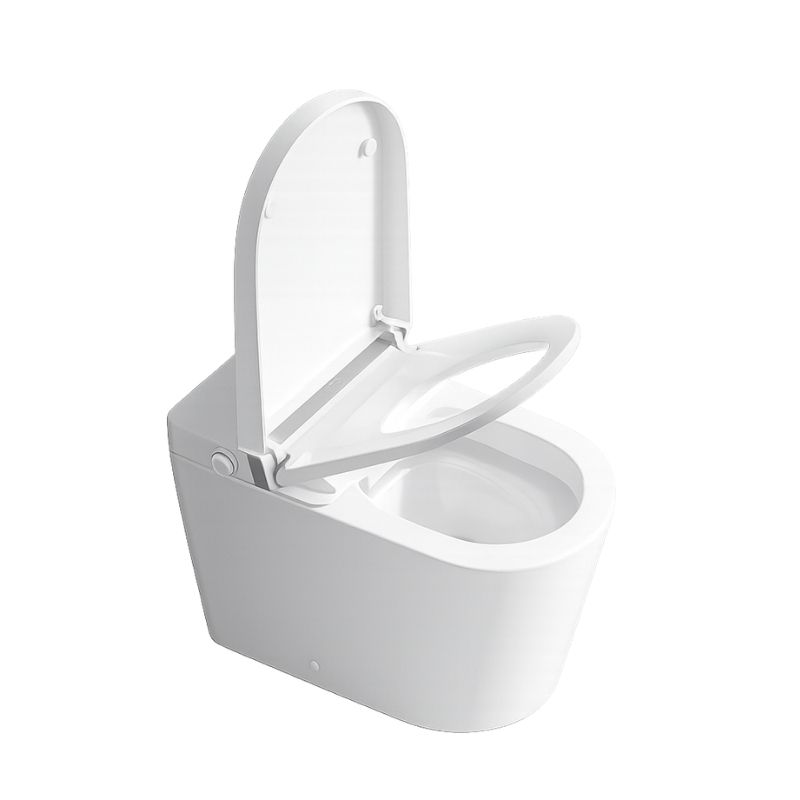
Seated detection has a quieter role, but it is often more important to the complete operating sequence. It tells the controller that a user is in the correct position and that certain functions may proceed.
Depending on the product design, the toilet may use this signal to enable washing, keep the lid or seat from moving, manage deodorization, and decide what should happen after the user leaves. In other words, it is not simply an occupancy feature. It is a permission and safety signal shared by several functions.
A buyer should therefore test more than whether the sensor recognizes one adult during a demonstration. Try different sitting positions. Shift weight naturally. Sit near the front of the seat and then farther back. Test a lighter user if that reflects your target market. Remain seated while operating the remote. Stand up, sit down again, and confirm that the controller changes state in a predictable order.
The response should feel quick, but speed alone is not the goal. A signal that changes too easily can make functions stop and restart as the user moves. A signal that is heavily delayed can make the product feel unresponsive.
The supplier should be able to explain the intended response time, how the occupied state is confirmed, and what happens if the signal briefly becomes unstable. For procurement, this information is more useful than a generic claim such as “high-sensitivity seat sensor.”
Foot Sensing Is an Intentional Command
A foot sensor normally works at close range and is meant to capture a deliberate gesture. Depending on the configuration, it may trigger flushing, lid opening, seat lifting, or another assigned function.
That makes foot sensing different from approach detection. The radar watches an area and predicts intent from movement. A foot sensor waits for a specific nearby action.
The most impressive showroom setting is not always the best production setting. If the active area is too wide, a mop, trouser leg, or person standing beside the toilet may trigger it. If the area is too narrow, customers may wave their feet repeatedly and assume the product is faulty.
Test the function with different shoes, bare feet, slower movements, faster movements, and slightly different angles. Then test the movements that should not count: walking past, cleaning around the base, standing up, and placing an object nearby.
A good demonstration should include both successful commands and rejected movements. Buyers need to see what the sensor ignores, not only what it accepts.
The Controller Decides Whether the Sensor Feels “Smart”
When you test the sample, remember that a sensor does not directly understand intention. It produces a changing electrical signal. The controller interprets that signal using thresholds, timing rules, and the current operating state.
Imagine a user approaching the toilet. The radar reports movement in the detection zone. The controller checks whether the target is approaching, whether the lid is already open, and whether another action is in progress. Only then should it issue an open command.
Later, the seated sensor confirms use. The controller enables the functions that require an occupied seat and blocks actions that should not occur. When the user stands, the controller may wait for a confirmed departure before flushing or closing the lid.
This short delay is not necessarily a defect. It can be part of the filter that prevents a small body movement from being interpreted as departure.
The same principle applies to foot control. The controller may require the signal to remain valid for a defined period, accept only one command, and ignore repeated signals until the first action is complete.
This filtering is sometimes called debouncing or signal validation. The buyer does not need to audit the source code, but you should verify the outcome: one intentional action should produce one predictable response.
A Reliable Toilet Needs a Clear State Sequence
As you follow the toilet through a complete use cycle, the three sensors should not compete with one another. They should support a clear sequence of states. A simplified user journey may look like this:
- Idle: No confirmed user is present. The toilet waits without unnecessary movement.
- النهج: The radar identifies movement inside the intended zone and opens the lid if the configuration allows it.
- Occupied: The seated sensor confirms use and enables the appropriate functions.
- Command: The user selects washing, drying, flushing, or another action through the remote, side control, or foot sensor.
- Departure: The occupied signal ends and the controller confirms that the user has left.
- إعادة الضبط: The toilet completes the configured flush or lid sequence and returns to idle.
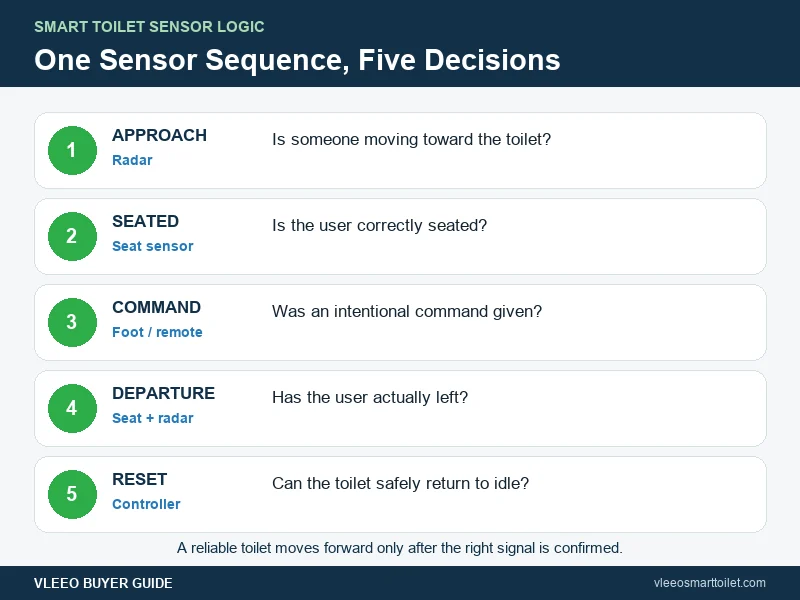
Real products may use more states, but this simplified flow gives buyers a useful way to examine the sample. At every stage, ask two questions: what signal moves the toilet forward, and what prevents an accidental signal from doing the same?
This also exposes conflicts that a feature checklist can hide. Can a foot gesture trigger a flush while the seated sensor still reports occupancy? Will the lid attempt to close if the user remains inside the approach zone? After a power interruption, does the controller return to a known state? If two commands arrive close together, which one takes priority?
You are not asking for proprietary programming details. You are asking for a predictable user experience.
Test the Bathroom, Not Just the Toilet
The sample you approve must work outside the showroom. Sensor performance changes with the installation environment, and the same toilet may behave differently beside a wall, opposite a reflective cabinet, near a moving door, or inside a narrow water closet. Before order approval, share the intended bathroom conditions with the supplier:
- Distance from the toilet to the door or main walking path
- Side clearance and nearby walls
- Reflective metal, glass, or large mirrors near the approach zone
- Expected users, including children or older adults
- Cleaning practices around the toilet base
- Whether the toilet will be installed in homes, hotels, apartments, or public-facing projects
These details help the supplier judge whether the standard sensor setting is suitable or whether the configuration requires adjustment. For a retail program, variation between homes matters. Your sample test should therefore include more than one layout when possible. For a hotel or apartment project, the repeated room layout is an advantage: once you validate the intended installation, you can use the same test route during mock-up approval and site inspection.
Seven Tests to Run Before Sample Approval
The following tests turn sensor claims into observable buying evidence. You can repeat them when comparing samples from different suppliers.
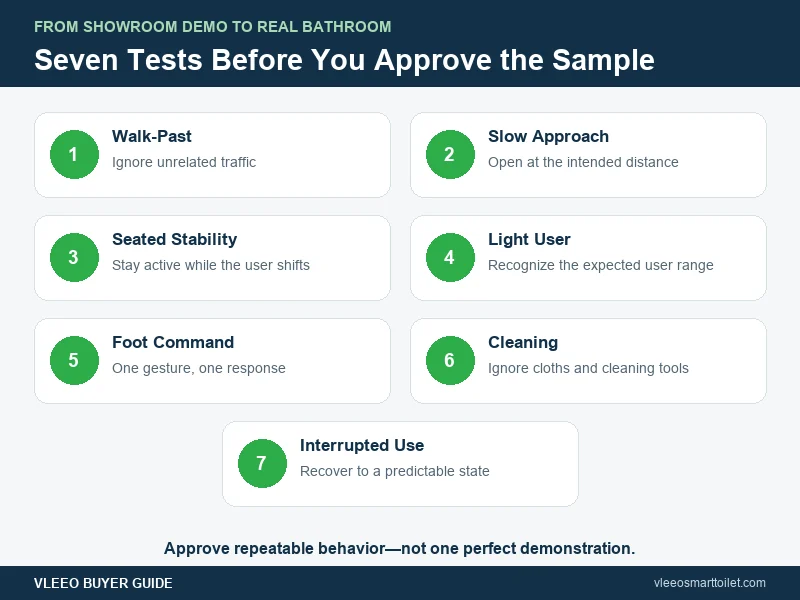
1. The Walk-Past Test
Walk across the bathroom entrance or past the toilet without turning toward it. Repeat from both directions. The lid should not open every time unrelated traffic enters the radar field.
If it does, ask whether the detection zone, sensitivity, or installation direction can be adjusted. Do not accept “the sensor is very sensitive” as the final explanation. Excess sensitivity can become a service problem.
2. The Slow-Approach Test
Approach naturally at different speeds. Some users move slowly, pause, or enter at an angle. Confirm that the lid responds early enough to feel convenient but not so early that it reacts to distant movement.
Record the approximate starting position and the bathroom layout. “It worked” is difficult to compare later; a repeatable test route is useful when evaluating another sample or confirming production consistency.
3. The Occupied-Stability Test
Sit normally, shift position, reach for the remote, and remain seated for several minutes. Functions that depend on occupancy should remain available without cycling on and off.
Then stand and observe the departure response. Repeat the sequence rather than judging it from one cycle.
4. The Light-User Test
If your market includes children, smaller adults, or assisted-living users, include representative users in the evaluation. Do not assume that a successful test with one sales manager covers the full user range. If a minimum activation condition applies, clarify it before confirming the product specification and sales promise.
5. The Deliberate-Foot-Command Test
Use different shoes and foot angles. Confirm that a clear gesture produces one action. Then leave the foot briefly in the sensing area and check that the toilet does not issue repeated commands. The acceptable gesture should be easy to demonstrate to a dealer, installer, or hotel operator.
6. The Cleaning Test
Move a cloth, mop, or cleaning tool around the base as a cleaner would. Check whether the foot sensor or approach logic creates unwanted actions.
This is particularly important for hotels and commercial projects, where staff clean many identical units quickly. A sensor that behaves well for the guest but badly during cleaning still creates an operational problem.
7. The Interrupted-Sequence Test
Approach, sit, stand, step back, and approach again before the toilet completes its normal reset. Try a foot command while another action is finishing. Observe whether the product recovers cleanly or becomes confused.
Customers do not follow laboratory-perfect movements. The controller should return to a predictable state after an interrupted sequence.
Ask for Evidence That Matches the Claim
When your supplier says a sensor is reliable, ask what was tested and what counted as a pass. Useful evidence may include the test setup, target distance or response time, number of operating cycles, environmental conditions, accepted and rejected movements, and the result after repeated cycling. A test report should identify the relevant configuration because one model name may cover several radar modules, foot-sensor options, controller versions, or regional electrical specifications.
This matters when approving a golden sample. The sample, quotation, specification, packaging label, production bill of materials, and inspection criteria should describe the same configuration. Otherwise, a successful demonstration does not guarantee that the bulk order contains the same sensor behavior.
Ask how the factory controls changes to the sensor module or controller program. If a component must be substituted, what validation is repeated? If the operating logic changes, how is the revision identified? These are reasonable procurement questions because sensor behavior is partly hardware and partly software.
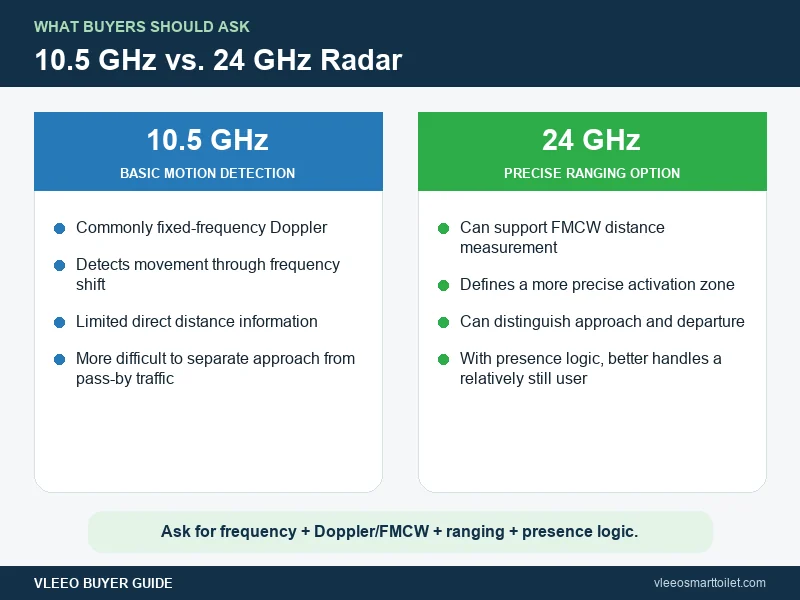
10.5 GHz vs. 24 GHz: A Key Radar Specification You Should Ask About
When a quotation says only “radar sensing,” you still do not know enough. You should ask for the operating frequency and the radar method because they affect what the module can measure and how precisely the toilet can define its detection zone.
A basic 10.5 GHz module is commonly used as a continuous-wave Doppler radar. It sends a fixed-frequency signal and detects the frequency shift created by a moving target. This gives the controller a simple motion signal, but a basic Doppler design does not directly provide precise distance or reliable stationary-presence information.
A 24 GHz module can also operate as Doppler radar, but a precise-ranging 24 GHz design may use FMCW, or frequency-modulated continuous wave. Instead of transmitting only one fixed frequency, FMCW sweeps through a frequency range. The difference between the transmitted and reflected signals can then be processed to estimate distance. With the appropriate antenna, processing, and human-presence logic, the controller can define a more accurate activation zone, distinguish approaching from departing movement, and reduce interference and false opening.
This is why 10.5 GHz and 24 GHz are not interchangeable labels on a quotation. The frequency is a key parameter, but you should ask one step further: Is the module motion-only or capable of ranging? Is it Doppler or FMCW? Can it detect human presence when the person becomes relatively still? What minimum and maximum activation distances are programmed? Can the factory show the measured distance and movement state during the test?
When you compare suppliers, request the radar model, frequency, operating method, detection range, presence logic, and finished-toilet test result. A supplier should be able to show how those parameters change the actual lid-opening behavior, not simply repeat the phrase “smart radar.”
FAQ: Questions Buyers Ask About Smart Toilet Sensors
1. How Does GHz Radar Work, and What Is the Difference Between 10.5 GHz and 24 GHz?
GHz means billions of electromagnetic-wave cycles per second. A radar module transmits a microwave signal and receives the reflection from a person or object. A basic fixed-frequency Doppler radar reads the frequency change created by movement, so it can tell that something is moving but cannot directly measure an exact distance. An FMCW ranging radar sweeps across a frequency band and compares the transmitted and reflected signals, allowing the controller to calculate distance and define a more precise activation zone.
A 10.5 GHz smart-toilet radar is commonly used for basic motion detection. It can trigger the lid when movement enters its field, but it has less information for distinguishing a person approaching the toilet from a pet or someone passing the doorway. A 24 GHz precise-ranging radar uses a shorter wavelength and, when paired with FMCW ranging and human-presence logic, can judge distance, approaching or departing movement, and continued presence more accurately. This gives the controller better information for reducing false openings and preventing the lid from closing simply because a seated user has remained relatively still.
2. What Radar Details Should You Request From the Factory?
Ask for the radar frequency, module model, Doppler or FMCW operating method, motion-only or ranging capability, approach and departure logic, programmed activation zone, and test result in the finished toilet. Then repeat the same walk-past, slow-approach, and interrupted-sequence tests on every sample you compare.
3. Why Can a Foot Sensor Work in the Showroom but Misbehave in a Bathroom?
The sensing principle, active distance, installation position, shoes, nearby objects, and cleaning movements can all affect the result. You should test both the gesture that must trigger the function and the movements that must be ignored. Also ask how response time and sensing performance are checked after repeated cycles.
4. Should You Approve a Sensor After One Successful Demonstration?
No. Run repeated tests in a bathroom layout close to the intended installation. Include different users, slow and angled approaches, longer seated use, cleaning activity, and commands issued while another action is finishing. You are approving repeatable behavior, not one successful moment.
The Best Sensor System Is the One Your Customer Does Not Notice
Customers rarely praise a toilet because its controller filtered a noisy signal correctly. They simply expect the lid to open when they approach, the wash function to work when they sit, and the toilet to flush when they give a clear command.
That effortless experience is created by many small decisions: where a sensor looks, how long the controller waits, which state has priority, what movement is ignored, and how the product returns to idle. Your goal is not to buy the most sensitive sensor or the longest feature list. Your goal is to approve a complete, predictable behavior that works for real users, real bathrooms, cleaning routines, and repeated operation.
Before you sign off on the sample, you should run the awkward tests—not only the impressive demonstration. The movements a sensor correctly ignores may protect your margin just as much as the functions it successfully triggers.
In the VLEEO laboratory, we verify approach, seated use, intentional commands, departure, and reset as one complete sensor sequence, and you are welcome to visit and experience the tests in person. You can first compare VLEEO smart toilet configurations أو send us your target market, bathroom layout, and required functions; the VLEEO team can help you match the radar and foot-sensor configuration and prepare the right sample test plan before you place the order.